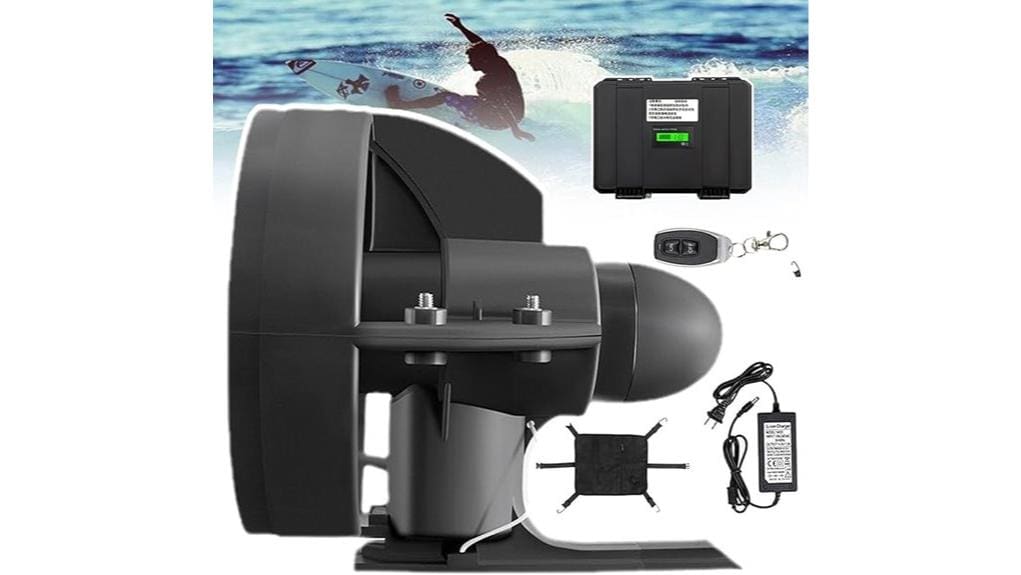

You’ll get quiet, reliable propulsion that turns your paddleboard, kayak, or small boat into a low‑speed electric craft without permanent mods. Installation is plug‑and‑play with a mounting plate and straps, and watch‑based controls give eco, cruise, and boost modes plus fall cutouts and haptics. Expect ~5+ mph top speed on low‑drag boards, ~2.5 hours at low speed, shorter at high output, and predictable battery wear—keep spares and service contacts handy if you want performance details.
Some Key Takeaways
- Battery-powered fin units add quiet, reliable propulsion to paddleboards, kayaks, and small boats with plug-and-play installation.
- Expect real-world top speed just over 5 mph on low-drag boards, with reduced performance in chop or headwind.
- Typical runtimes: about 2.5 hours on low speed and roughly 50 minutes on high/boost modes.
- Wearable watch controls modes, battery state, and safety cutouts; audible/haptic alerts warn of low battery or overheating.
- Long-term costs hinge on battery care, seal inspections, and vendor support; follow storage and charging best practices.
Quick Verdict: Who Should Buy Battery Electric Fins
If you want to add quiet, reliable propulsion to a paddleboard, kayak, or small fishing boat without changing your craft, Battery Electric Fins are worth considering. You’ll get plug-and-play installation, predictable control, and scaled thrust for low-drag hulls. Choose them if you value independence on the water: they extend range for family outings, support steady positioning for water yoga, and reduce physical strain without complex retrofits. They suit solo explorers, recreational fishers, and anyone prioritizing simple, reversible power. You won’t get a full marine retrofit, but you’ll gain discreet, controllable propulsion that preserves vessel characteristics and freedom. Many inflatable kayak enthusiasts also pair them with essential accessory kits for storage and mounting on inflatables inflatable kayak gear.
Real-World Performance: Speed, Runtime, and Thrust You Can Expect
When you push the Battery Electric Fins into service, expect practical performance figures rather than idealized lab numbers: real-world top speed exceeds 5 mph on low-drag paddleboards, low-speed runtime reaches about 2.5 hours, and high-speed operation runs roughly 50 minutes. You’ll gauge top thrust by acceleration and hold under load; measured thrust is progressive, not jarring. Speed consistency holds well in calm water but falls with chop and headwind. Monitor battery degradation over seasonal cycles; capacity loss shifts your real world range downward predictably. Operate conservatively to preserve range and retain reliable, liberating propulsion on outings. Consider carrying an emergency power bank to keep electronics charged and ensure on-water safety during longer trips.
Fit and Installation: Converting Any Paddleboard Into a Powered Board
Although paddleboards vary widely in shape and material, the Battery Electric Fins kit installs cleanly on almost any board by using a simple mounting plate and adjustable straps that distribute load without drilling. You’ll use supplied mounting templates to position the plate precisely; templates reduce misalignment and maintain board balance. The kit’s modular thruster unit clips to the plate, and waterproof connectors join power and control harnesses, minimizing exposure and simplifying maintenance. Installation takes minutes with basic tools and two hands. You retain board integrity and mobility, converting between paddle and powered modes without permanent modification or performance compromise. For storage and transport, consider a quality kayak cover to protect your board and converted setup from UV damage and abrasions.
Controls, Safety, and User Experience (Watch Control, Speed Modes)
Using a wearable watch as the primary interface lets you manage the Battery Electric Fins' power and speed without breaking your balance or taking your eyes off the water. You access a streamlined watch interface that presents mode selection, battery state, and real‑time speed. Three speed modes give predictable acceleration profiles: eco for endurance, cruise for steady thrust, and boost for short sprints. Safety features include automatic cutout on falls, gradual ramping to prevent torque spikes, and audible/haptic alerts for low battery or overheating. You’ll appreciate responsive controls, clear telemetry, and fail-safe behaviors that preserve mobility and freedom on open water. For kayakers looking to pair gear seamlessly, consider a waterproof fitness watch that’s optimized for paddling conditions.
Ownership Costs and Support: Battery Care, Maintenance, and Customer Service Response Time
Because battery health drives both runtime and longevity, you’ll want a clear care routine from day one. You should follow recommended battery storage conditions — cool, dry, partially charged — to minimize capacity loss. Inspect seals and connectors after each session, log charge cycles, and avoid full-depth discharges to extend service life. Understand warranty terms before purchase: coverage period, failure diagnostics, and approved service centers. Factor in replacement parts availability and cost when estimating ownership expenses. Fast service turnaround matters; expect customer inquiries answered within 24 hours and prioritize vendors with stocked parts and documented repair timelines. For kayakers, consider carrying a compact GPS backup battery to ensure navigation and safety systems remain powered during extended trips.
Some Questions Answered
Can Battery Electric Fins Be Used in Saltwater Without Extra Corrosion Protection?
No — you shouldn’t use them in saltwater without extra corrosion protection. Saltwater corrosion attacks metal parts and electrical contacts; you’ll need regular anode maintenance and protective coatings to prevent accelerated wear. You should rinse the unit with fresh water after each use, inspect sacrificial anodes, and follow manufacturer service intervals. With proper anode maintenance and corrosion-resistant treatments, you’ll preserve performance, runtime, and safe operation while enjoying open-water freedom.
Are Replacement Propellers and Fins Sold Separately?
Yes — replacement propellers and fin upgrades are sold separately. You’ll order replacement propellers for worn blades or swap fin upgrades to change thrust profile and handling. The parts match the electric underwater thruster interface and maintain proven propeller technology performance. You’ll retain compatibility with the paddleboard power kit and control systems; installation is straightforward. Contact support if you need fitment guidance — they’ll respond within 24 hours.
Can Two Units Be Mounted Together for Tandem Boards?
Yes — you can mount two units on a tandem board. You’ll need proper mounting adapters and to verify board load limits. You’ll pair motors using motor sync so thrust vectors match and yaw stays neutral; test at low speed to confirm balanced trim. Install symmetrically, route wiring cleanly, and secure batteries per weight-distribution guidelines. Maintain controller mapping so both units respond identically, preserving range and control for adventurous, liberated outings.
Is the Watch Control Compatible With Smartwatches From Other Brands?
Yes — the watch control supports cross platform pairing so you can use the watch app with many smartwatches. You’ll want to confirm third party compatibility for your specific model; most popular OSes work after a quick pairing. You’ll receive firmware updates to maintain connectivity and add features. You’ll pair, test speed controls, and rely on proven telemetry; if something’s off, contact support for a fast resolution within 24 hours.
Are There Weight or Storage Limits for Airline Travel With the Battery?
Yes — you’ll face battery regulations and luggage capacity limits for airline travel. Most airlines restrict lithium batteries by watt-hours (Wh); batteries over allowed Wh require airline approval or are prohibited in checked luggage. You should confirm your battery’s Wh rating, carry it in carry-on with terminals insulated, and note airline-specific limits on quantity and percentage of luggage capacity used. Always check the carrier’s policy before travel to avoid surprises.