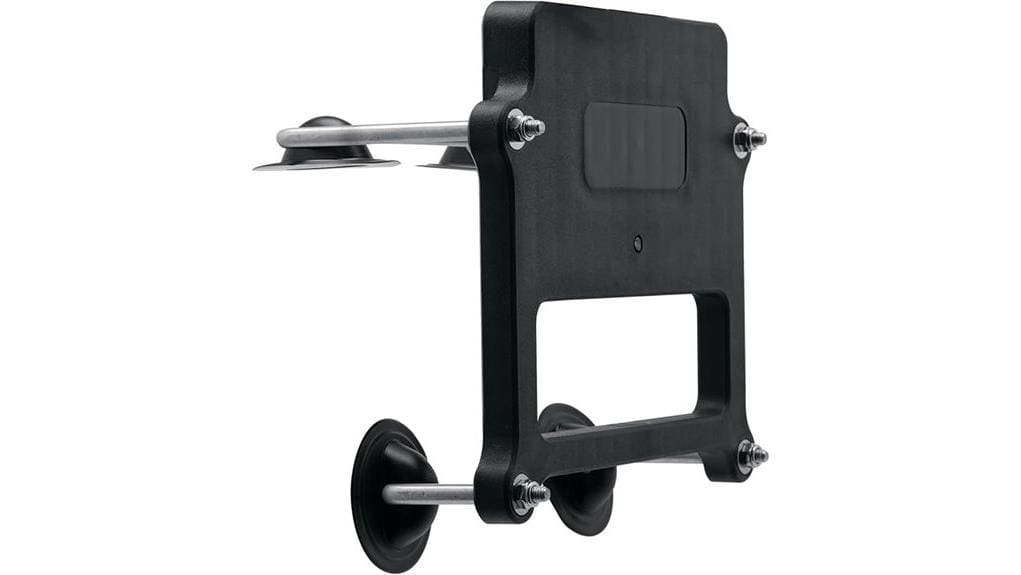

You’ll find the Extreme Max 3006.8678 is a practical, universal transom mount for adding a trolling motor to an inflatable float tube; it’s light, quick‑release and bolts securely when you bond the permanent plate with HH‑66 vinyl cement. The kit includes stainless hardware, seals and backing plates for a durable bond, but you’ll need to follow adhesive cure and torque steps carefully for stability and corrosion resistance. Keep going for installation tips, performance notes and alternatives.
Some Key Takeaways
- Universal transom bracket fits most small trolling motors and mounts to inflatable float tubes with the included hardware and seals.
- Requires HH-66 Vinyl Cement (not included) for permanent bonding to inflatable material; follow manufacturer curing and safety steps.
- Quick-release plate allows fast motor removal and repeatable reinstalling, easing transport and storage.
- Stainless fasteners and backing plates provide secure attachment, though saltwater users should rinse and inspect for corrosion.
- Best for anglers wanting lightweight motorization with quick setup; consider clamp-on or pontoon mounts for heavier motors or greater load spread.
Quick Verdict: Who This Mount Is Best For
If you want to add a transom-mounted trolling motor to an inflatable float tube, this mount is for you. You’ll appreciate its portability benefits if you value quick setup, removal, and compact storage for solo trips. It suits anglers who want motorized range without a rigid boat—kayak converts, float-tube anglers, and mobility-limited users seeking independence. The universal fit covers most transom-mount models, and the permanent affix with quick-release balances stability and freedom. Expect straightforward installation steps and reliable field performance. Target user demographics favor lightweight, self-reliant fishers who prioritize transportability and uncomplicated motor integration. This mount is especially useful for owners of hard-shell inflatables who need a durable, space-saving motor mounting solution.
What’s Included and Why HH‑66 Vinyl Cement Matters
When you open the Extreme Max 3006.8678 kit, you get the full set needed to mount a transom motor to an inflatable float tube: the transom bracket assembly, quick‑release mounting plate, hardware, and sealing components sized for inflatable fabric; HH‑66 Vinyl Cement isn’t included but is required to bond the permanent mount to the tube’s material. You’ll find stainless fasteners, backing plates, and perimeter seal strips—everything to position and secure the bracket. You must supply HH‑66 for proper adhesive curing; follow manufacturer times and chemical safety guidance. Proper bonding guarantees a durable, transportable setup that preserves your freedom on the water. For longevity and safety, also consider carrying essential inflatable kayak gear like a repair kit and inflatable kayak essentials when you install and use the mount.
Step‑by‑Step Installation and Quick‑Release Setup Tips
Now that you’ve confirmed the kit contents and supplied HH‑66 Vinyl Cement, lay out your tools and choose a flat, clean work area near the tube. Start by dry-fitting the transom plate, checking tool alignment and hole positions. Clean mating surfaces, apply cement per directions, and clamp briefly for cure. Attach bracket hardware, torque evenly, and verify quick‑release latch movement. Perform safety checks: inspect bond lines, verify fasteners, and confirm the release operates under load without binding. Practice removing and reinstalling the bracket until smooth. Store fasteners and release pins separately for travel to preserve freedom and reduce on‑water adjustments. For easy transport and shore handling, consider using a compact kayak cart.
Real‑World Performance: Stability, Motor Fit, and Durability
Although the mount’s design looks simple, you’ll notice its real-world stability depends on proper placement and secure bonding to the tube’s transom area. You’ll position the bracket according to motor placement guidance to balance thrust and prevent yaw; incorrect placement lets the motor lever and the tube fight each other. The quick‑release fits most motors snugly, providing reliable alignment and minimal play for consistent tracking. You’ll appreciate the vibration damping built into the clamp, which reduces chatter and protects fasteners. Materials show decent corrosion resistance when rinsed after use; ongoing checks of adhesive and hardware keep the system dependable for independent, mobile angling. For easier transport between put‑ins, consider using a portage cart designed for kayak and gear movement.
Final Pros, Cons, and Alternative Mounting Options
Having seen how placement, bonding, and hardware upkeep affect stability and tracking, you can judge the mount by clear pros and cons and consider mounting options that might better suit specific boats or motors. Pros: universal fit, quick-release for travel, lightweight kit that preserves weight distribution and eases transport. Cons: requires HH-66 Vinyl Cement for permanent bonding, limited padding for heavy-duty use, potential corrosion resistance concerns on long-term saltwater exposure. Alternatives: clamp-on transom adapters, pontoon-specific mounts, or custom DIY plates for better load spread. Choose based on motor thrust, boat material, and desire for removable freedom. Consider also how an anchor system integrates with your kayak to maintain stability when trolling and during anchor deployment.
Some Questions Answered
Can It Be Used on Non-Inflatable (Hard-Shell) Boats?
Yes — you can use it on hard shell boats if you consider compatibility and deck mounting details. You’ll need to adapt attachment points because the mount’s permanent bonding method targets inflatable material; on a hard hull you’ll likely use transom adapters or a reinforced deck mounting plate and appropriate fasteners. Verify structural support measures, seal penetrations, and motor alignment. If you guarantee proper reinforcement and corrosion-resistant hardware, the mount will work reliably.
Does the Mount Affect Inflatable Tube Inflation or Buoyancy?
No — it won’t meaningfully reduce inflation or buoyancy if you install and maintain it properly. You’ll avoid material abrasion by placing the mount on reinforced transom sections and using the recommended HH-66 vinyl cement for secure bonding. The mount spreads load via pressure distribution across the transom, preventing localized deflation. Inspect seals and attachment points periodically, and remove the bracket for travel to preserve tube integrity and flotation freedom.
Is Any Hardware Included for Angling or Tilting the Motor?
No, the kit doesn't include dedicated tilt hardware; it provides a fixed transom bracket with quick-release but not a separate angle adjustment assembly. You'll mount the bracket permanently to your float tube and use the quick-release for removal, but if you want adjustable tilt or specific angle adjustment you'll need to add compatible aftermarket tilt hardware or select a motor head with built-in angle control. Installation still requires HH-66 vinyl cement.
Can the Mount Remain Installed During Winter Storage Outdoors?
You can, but you shouldn't leave it outdoors without precautions. Cold corrosion and UV degradation can weaken glued seams, metals, and plastics over winter. You'll preserve freedom to use the mount by removing the quick‑release bracket, rinsing and drying components, applying corrosion inhibitor to metal parts, and covering or storing the main mount in a dry, shaded spot. If you must leave it, at least cover it with UV‑resistant, breathable material and inspect in spring.
Does the Mount Void Warranties on My Float Tube or Motor?
No—installing the mount itself typically doesn't automatically void warranties, but you should check your float tube and motor manuals for specific terms. You’ll want to confirm warranty transfer rules and any manufacturer compatibility notes before installing. If adhesive or permanent mounting could be considered modification, document installation and consult both manufacturers. That protects your freedom to use the mount while preserving warranty rights and avoiding unexpected denial of coverage.