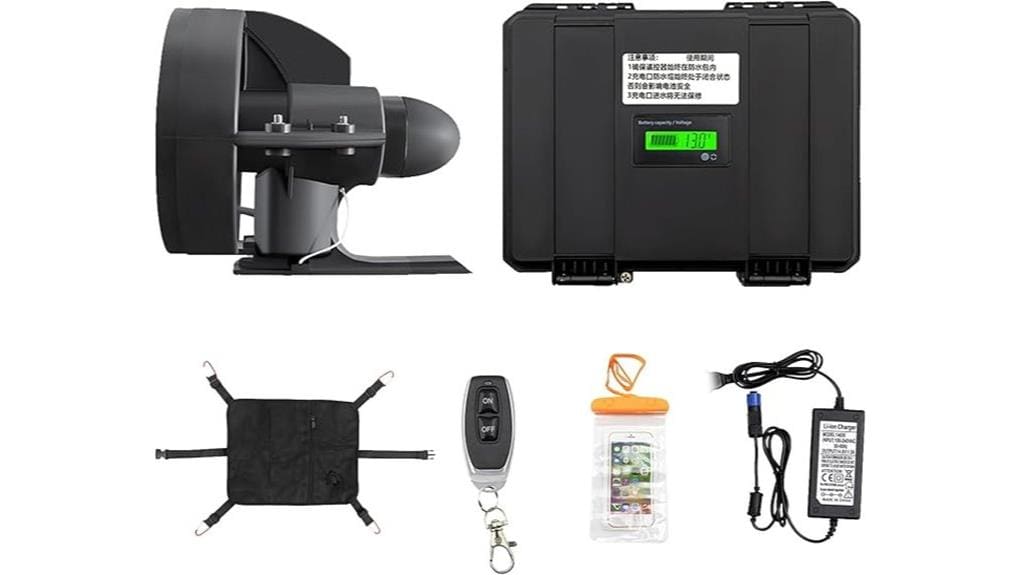
You’ll get predictable, lightweight thrust: the 216 Wh pack draws about 18 A and pushes roughly 3–4 km/h for ~2 hours, while the 288 Wh draws ~24 A for ~4–5 km/h and about 1.5 hours. Both slide into a standard 9-inch fin box and suit kayaks, SUPs and inflatables; the hand switch gives instant cutoff and the supplied waterproof bag protects the controller. Choose 216 Wh for light, short trips and 288 Wh for heavier loads or higher speed — more details follow.
Some Key Takeaways
- 216 Wh pack yields ~3–4 km/h at ~18 A for about 2 hours, favoring light, short outings.
- 288 Wh pack draws ~24 A, giving ~4–5 km/h for ~1.5 hours, better for heavier loads or higher speed.
- Slides into a standard 9-inch fin box with included kit for easy, reversible mounting across watercraft.
- Hand switch offers continuous forward thrust and an emergency stop; store controller in supplied waterproof bag.
- Unit weighs ~4.9–5.1 kg, balancing portability against extra thrust — choose based on trip length and payload.
Performance and Runtime: Real-World Speed, Current Draw, and How Long Each Battery Lasts
When you push the motor, expect steady, modest speeds rather than sprinting performance: the 216 Wh pack pulls about 18 A and yields roughly 3–4 km/h for about 2 hours, while the 288 Wh option draws ~24 A and gives roughly 4–5 km/h for ~1.5 hours. You’ll plan trips knowing runtime scales with load and conditions; headwind, currents, and rider weight cut range. Use basic load testing to verify real-world draw and monitor battery chemistry effects on capacity over cycles. You’ll value predictable output: conservative speeds, repeatable runtimes, and clear trade-offs between weight, power, and freedom. These batteries are ideal backup options for kayakers and beginners who need reliable, portable power GPS backup.
Mounting and Compatibility: Installing in a 9 Fin Box on Kayaks, SUPs, and Inflatables
Having a clear sense of speed and runtime helps you choose the right mounting approach for your craft and conditions. You slide the unit into a standard 9-inch fin box; the included mounting kit locks without drilling. That universal fit means quick swaps between kayaks, SUPs, inflables and hybrid hull types. You’ll check alignment so the propeller clears hull contours and trim lines, and secure the battery bag within reach to balance weight. For inflatables, confirm valve placement and deck strength before clipping on. Installation is fast, reversible, and keeps you mobile across varied watercraft. For inflatable kayak users, also carry essential repair and inflation gear like a pump and patch kit to stay prepared on the water, especially when paddling inflatable kayaks.
Control, Safety, and Waterproofing: Using the Hand Switch and Protecting the Controller
Start by familiarizing yourself with the hand switch layout and its limits: a forward button for continuous thrust and a stop button to cut power instantly. You’ll rely on the stop as an emergency cutoff; practice one-handed operation so reactions are instinctive. Use supplied waterproof bag and additional waterproofing techniques—sealed cable glands, dielectric grease on connectors—to keep the controller dry during rough launches. Secure the controller inside the bag to prevent snagging and test responsiveness before departure. Schedule routine controller maintenance: clean contacts, inspect seals, and confirm battery connections. These measures keep control simple, reliable, and safe while you pursue open-water freedom. For kayak trips, consider pairing the motor with an insulated stainless steel bottle to keep drinks protected and reduce clutter in the cockpit.
Weight, Portability, and Packing: What the 4.9 Kg Vs 5.1 Kg Units Mean on the Water
After you’ve secured the controller against water and practiced quick shutoffs, consider how the motor’s mass affects handling, transport, and on-water feel. The 4.9 kg unit trims marginal weight, improving carrying convenience for solo launches and tighter storage in the 39×31×26 cm package. On-board, lighter mass shifts balance dynamics subtly forward, easing paddling corrections and lessening trim change when mounted on a SUP or inflatable kayak. The 5.1 kg option adds 0.2 kg but offers higher power; it demands slightly more effort lifting and packing yet stays compact. Decide by how much weight you’ll carry versus the extra thrust you want. Also consider how compatible the motor is with your gear and cart systems, especially if you use an all-terrain cart for frequent launches and landings.
Which Battery Should You Pick? Practical Recommendations by Use Case and Distance
Because your choice hinges on typical trip distance and boat type, match the 216 Wh pack to short, solo outings and the 288 Wh to longer runs or heavier loads. You’ll pick 216 Wh if you prioritize lightness, simple range planning for 2-hour trips, and easier battery maintenance. Opt for 288 Wh when you need higher speed, extra payload margin, or extended range despite slightly greater weight and 1.5-hour runtime tradeoffs. Consider charging logistics: pack the 2-meter charger, plan shore top-ups, or swap batteries. Always carry emergency backups or signaling gear rather than relying solely on remaining charge. For beginners, choose gear that complements your fitness goals and kayak setup, especially beginner fitness programs that focus on paddling technique and safety.
Some Questions Answered
Can the Battery Be Charged Onboard From a 12V Boat Socket?
Yes — you can charge onboard from a 12v boat socket if you have 12v compatibility. You’ll use the supplied 2-meter charger, but confirm your socket supplies proper voltage and polarity and that your boat’s system can handle the draw. For safety, isolate battery connections, monitor charging, and avoid charging during heavy electrical loads. This keeps you free to recharge underway while protecting boat electronics and extending battery life.
Are Spare Propellers or Repair Parts Available for Purchase?
Yes — you can buy spare blades and replacement shafts. You’ll want to keep spare blades on hand if you paddle in rocky or shallow areas, and replacement shafts are sold for wear or impact damage. Check the manufacturer or authorized dealers for genuine parts; third-party options may fit but vary in quality. Order ahead so you’re not stranded; having spares keeps you free to get back on the water quickly.
Is the Unit Safe to Use in Saltwater Without Rinsing?
No — you shouldn’t leave it un-rinsed after saltwater use. Salt increases corrosion risk and can degrade electrical insulation over time, reducing marine compatibility. Rinse with fresh water, dry, and inspect seals and the controller bag. If available, fit anode protection or check sacrificial anodes regularly. Doing this preserves performance, prevents shorts, and keeps mounting and contacts serviceable so you can keep using the unit freely and safely.
Can the Motor Run While the Craft Is Being Paddled Manually?
Yes — you can run the motor while paddling manually. You’ll use the manual override via the hand switch to engage thrust while still paddling, so paddling compatibility is preserved. You’ll feel added propulsion and some drag changes, so coordinate strokes and motor power for efficiency. Don’t expect seamless autopilot; balance throttle and paddle input to maintain control and extend battery runtime for greater on-water freedom.
What Warranty and Customer Support Options Are Offered?
You get a limited warranty covering defects in materials and workmanship for a defined period, and you'll be eligible for repair or replacement under that Warranty coverage. You can contact Support channels via email, phone, or the vendor’s online portal for troubleshooting, claims, and spare parts. You’re encouraged to register the product, keep purchase proof, and follow maintenance steps to preserve coverage so you can stay mobile and independent on the water.


