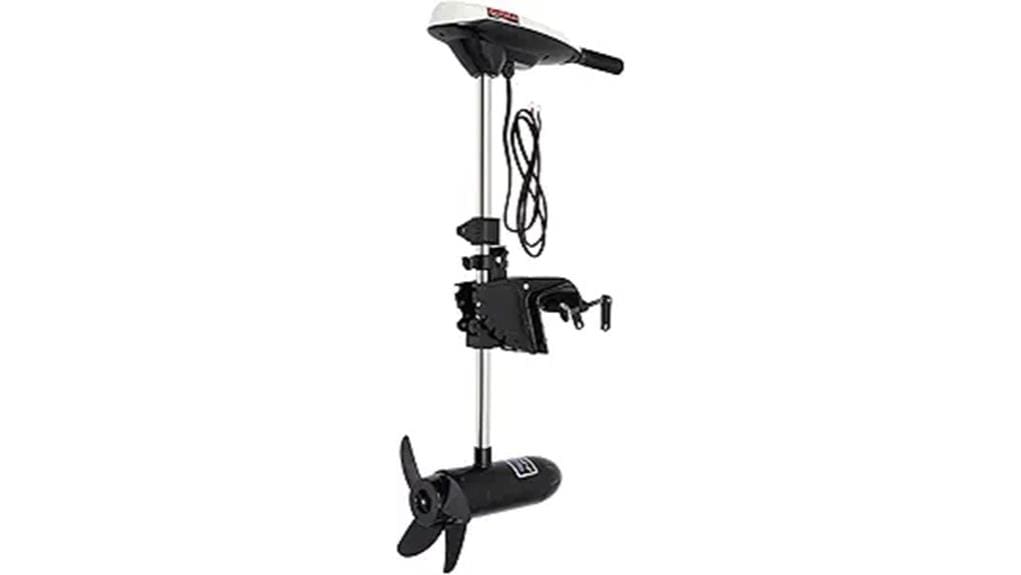
You’ll get about 65 lb thrust and a practical 660 W output for low‑speed control, anchoring, and trolling; expect real‑world top speed lower on loaded boats and a rated current near 55 A at 12 V. The motor uses copper windings, a 400 mm stainless shaft, and a streamlined housing for durability and quiet ~50 dB operation. Installation is tool‑light and you’ll need battery, charger, and gear oil; keep going and you’ll learn detailed specs, uses, and tradeoffs.
Some Key Takeaways
- Provides about 65 lb thrust and 660 W power, ideal for low-speed tasks like anchoring, trolling, and station-keeping.
- Copper windings and stainless steel 400 mm shaft improve durability and thermal performance under typical 55 A loads.
- Real-world top speed is lower than rating; best suited for control and slow maneuvering rather than high-speed transit.
- Tool-free transom mounting, quiet ~50 dB operation, and anti-winding prop reduce installation time and maintenance.
- Limitations: short shaft for deeper transoms, brush motor maintenance required, and separate battery/gear oil needed.
What the 65LB Thrust Trolling Motor Actually Delivers in Performance
Although labeled 65 pounds, the thrust rating gives you a practical benchmark rather than a guarantee of top performance across all conditions. You’ll expect sufficient lowspeed control features for anchoring and slow trolling, but actual output depends on hull drag, payload, and current. With a rated power of 660 W and maximum speed near 11 km/h, real-world top speed will be lower on loaded boats. You’ll monitor battery life closely: rated current is 55 A at 12 V, so runtime varies with battery capacity and throttle. Use conservative estimates for range planning and prioritize efficient trim and steering to extend endurance. Solar chargers designed for kayakers can help extend that runtime by topping up batteries during long outings with portable solar panels.
Build Quality and Key Specs: Copper Windings, Shaft, and Housing
Several key components determine the motor's durability and real-world reliability: the pure copper windings, stainless steel shaft, and fin‑streamline housing. You get copper windings that offer high conductivity and thermal management, improving copper durability under sustained 55 A loads. The stainless steel shaft resists bending and corrosion; its 400 mm short length balances torque transfer and maneuverability. The fin-streamline housing shields the propeller and reduces flow separation, enhancing housing aerodynamics and impact resistance. Tightened mounting brackets secure the transom interface. Overall, material choices and geometry prioritize longevity, efficient power use, and low maintenance for independent operators. For paddlers and beginners, having reliable GPS backup batteries is an important safety consideration when using electric trolling motors.
Real-World Use Cases: How It Handles Fishing, Kayaks, and Inflatable Boats
When you mount this 65 lb-thrust, 12 V trolling motor on small craft like fishing boats, kayaks, or inflatables, it delivers predictable low‑speed maneuvering and sufficient push for typical single-operator loads. You’ll control drift and station-keep during casting, relying on 65 lb thrust and 660 W power to counter moderate wind and current. On kayaks, torque aids kayak stability when repositioning; short 400 mm shaft suits shallow-water use. On inflatables, the motor pairs with inflatable anchoring techniques to hold position without overstressing the hull. Noise at 50 dB and anti-winding prop design support stealthy, low-maintenance operation. Consider pairing the motor with electric bilge pumps for added safety on small craft.
Installation, Controls, and Maintenance Checklist (What to Do First)
Before you mount the motor, gather tools, a suitable 12 V battery and charger, the correct gear oil, and safety gear so you can complete installation and initial setup without interruption. Follow tool free setup instructions to attach the transom bracket, tighten clamps, and stow the telescopic control handle. Perform battery prep: charge to full, verify capacity, and secure terminals with corrosion protection. Add specified gear oil to the gearbox before first run and plan a post–run oil change after break‑in. Test speed control, steering, and emergency kill switch. Record maintenance dates and inspect seals, prop, and shaft regularly. Consider pairing your setup with kayak anchors suitable for beginners to improve holding while you test and fish.
Who Should Buy This Motor : Pros, Cons, and Alternative Options
Having completed setup and initial checks, you can now evaluate whether this 65 lb‑thrust, 12 V trolling motor fits your needs. You should buy it if you operate small watercraft and need robust low‑speed control for fishing or short excursions. Pros: 65 lb thrust, 660 W output, stainless shaft, pure copper windings, quiet 50 dB operation, tool‑free transom fit. Cons: short 400 mm shaft limits use on deeper transoms, requires separate battery/charger and gear oil, brush motor maintenance. For budget buyers consider simpler low‑power models; for portability seek lightweight alternatives with longer shafts and brushless motors. This motor is a solid choice for users of hard-shell inflatables who want reliable performance and easy mounting on small kayaks.
Some Questions Answered
Can This Motor Be Mounted on Port and Starboard Sides Simultaneously?
No — you can't mount this single motor on both port and starboard simultaneously. The transom-mounted design expects one installation; achieving dual mounts side by side requires two separate motors or a custom fabricated bracket. If you want dual mounts, install two units with proper spacing and independent controls. You'll need to verify transom strength, electrical capacity, and steering linkage; tool-free installation may ease fitment but structural and power checks remain essential.
Is the Propeller Available as a Spare Part Separately?
Yes — you can buy spare propellers separately; dealers often stock spare propellers and replacement shafts as service parts. You’ll want to confirm model compatibility and shaft length (short 400 mm) before ordering. Expect propellers with the anti-winding, thickened design and stainless steel shafts sold either individually or in kits. Keep in mind gear oil, batteries and chargers aren’t included with parts; installation is straightforward for someone comfortable with basic tools.
What Battery Capacity Gives Optimal Run Time at Full Thrust?
You’ll get ideal run time at full thrust with a deep‑cycle 12V battery around 120–150 Ah. With a 55 A amp draw at full power, a 120 Ah battery yields practical runtime estimates near 2 hours (120 Ah / 55 A ≈ 2.18 h raw; allow 80% usable → ~1.7 h). A 150 Ah pack extends usable runtime toward 2.2–2.4 hours. Prioritize power efficiency, battery health, and weight for freedom on the water.
Does the Motor Have Built-In Thermal or Overload Protection?
No — the motor doesn’t list built-in thermal protection or overload safeguarding. You’ll need to provide external safeguards: a properly rated fuse or circuit breaker, a temperature monitor on the motor or battery, and a controller with current-limiting features. Install gear oil and make certain ventilation and correct wiring to minimize overheating. For continuous heavy use, choose a battery and controller sized to limit sustained current to the motor’s 55 A rating.
Are Waterproofing Ratings or IP Certifications Provided?
No specific waterproofing ratings or IP certifications are provided. You should assume limited protection against water ingress and plan accordingly; avoid submersion and keep electrical connections dry. That lack of formal IP rating may affect warranty coverage if water damage occurs, so document use conditions and follow manufacturer maintenance guidance. For confident, unrestricted use in wet environments, consider adding external seals or choosing a unit with certified IP protection to safeguard performance and warranty.