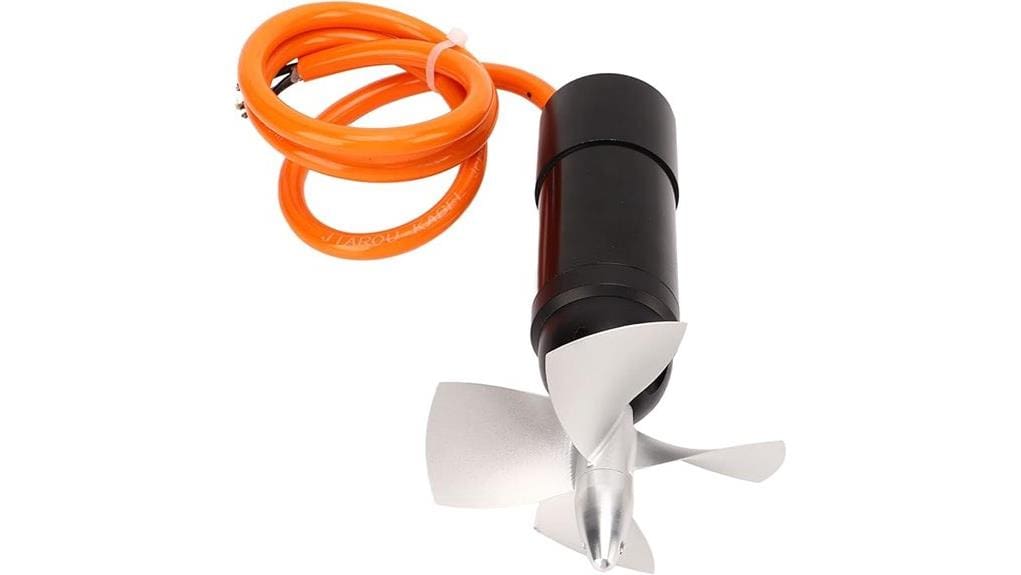

You’ll find a compact, brushless 12–48V underwater thruster that’s optimized for high‑torque, efficient submerged propulsion and straightforward retrofit on kayaks, ROVs, and small boats. CNC‑machined 6061 covers, four‑blade aluminum prop, and epoxy‑potted windings give durable sealing and thermal handling; it makes up to ~18 kg thrust at 48V with modest ripple and low noise until extreme RPMs. Match voltage to duty cycle and platform; the next section covers mounting, power sizing, and troubleshooting.
Some Key Takeaways
- Compact, brushless four‑blade thruster optimized for 12–48 V systems delivers up to 18 kg thrust at 48 V for kayaks, ROVs, and small boats.
- CNC‑machined 6061 aluminum covers, aluminum prop, copper coils, multi‑lip O‑rings, and epoxy potting provide durable, serviceable sealing and thermal management.
- Best efficiency and battery simplicity at 12–24 V for kayaks; choose 24–48 V for peak thrust, faster response, and workboat/ROV tasks.
- Expect modest thrust ripple, low noise, good heat dissipation, and cavitation only at extreme RPMs; monitor current spikes under transients.
- Install with specified torque, sealed cable glands, and tank testing; troubleshoot overheating, vibration, or reduced thrust by checking prop and seals.
What the 12–48V Underwater Thruster Is and Who Should Consider It
Meet the 12–48V Underwater Thruster: a compact, brushless four‑blade propulsion unit engineered for submerged applications where efficient, high‑torque thrust matters. You’ll assess it as a propulsion module optimized for marine applications requiring compact form, robust torque, and efficient power use. You can integrate it into kayaks, unmanned vessels, ROVs, or retrofit electric watercraft when you need reliable submerged thrust. Your user selection should weigh operational voltage range, mounting options, and serviceability. The technical profile favors operators who prioritize mobility, autonomy, and straightforward installation over decorative features or nonessential accessories. This thruster is particularly suited to small craft and devices that benefit from portable power and on‑the‑water charging solutions.
Straight Specs: Materials, Dimensions, Electrical Range, and Rated Thrust
Because the thruster's design prioritizes durability and compact power, you get CNC‑machined 6061 aluminum front and rear covers, an aluminum‑alloy four‑blade propeller, and high‑purity, high‑temperature copper coils driving a brushless motor optimized for underwater use. You’ll note CNC durability in external housings, Coil composition specified for thermal stability, and Propeller design tuned for steady thrust and cavitation resistance. Dimensions: 2.96 lb unit, 10.51×6.34×5.55 in package. Electrical range: 12–48 V input, scalable control. Rated thrust: up to 18 kg at 48 V. Sealing methods: multi‑lip O‑rings and epoxy potting for long-term immersion reliability. Proper hatch seal lubrication is essential for preventing water ingress in kayak compartments hatch seal care.
Real-World Performance: Thrust, Efficiency, Heat and Current Handling, and Noise
When you push the 12–48V thruster toward its upper voltage range, it reliably produces the rated thrust of up to 18 kg at 48 V while maintaining efficient power transfer from the brushless motor to the aluminum‑alloy four‑blade propeller. You’ll measure modest thrust ripple under steady loads; transient loads create current spikes that the controller absorbs with minimal thermal throttling thanks to high‑purity copper coils and CNC aluminum covers. Blade cavitation appears only at extreme RPMs, increasing noise and accelerating bearing wear. Sonar interference is low but detectable near sensitive arrays. Data-driven tuning preserves efficiency, limits heat, and extends service life. These thrusters can be paired with small electric bilge pumps to improve overall kayak safety by managing both propulsion and water removal kayak safety.
Which Platforms and Use Cases Suit This Thruster (Kayaks, ROVs, Boats) and How to Match Voltage/Prop/Power
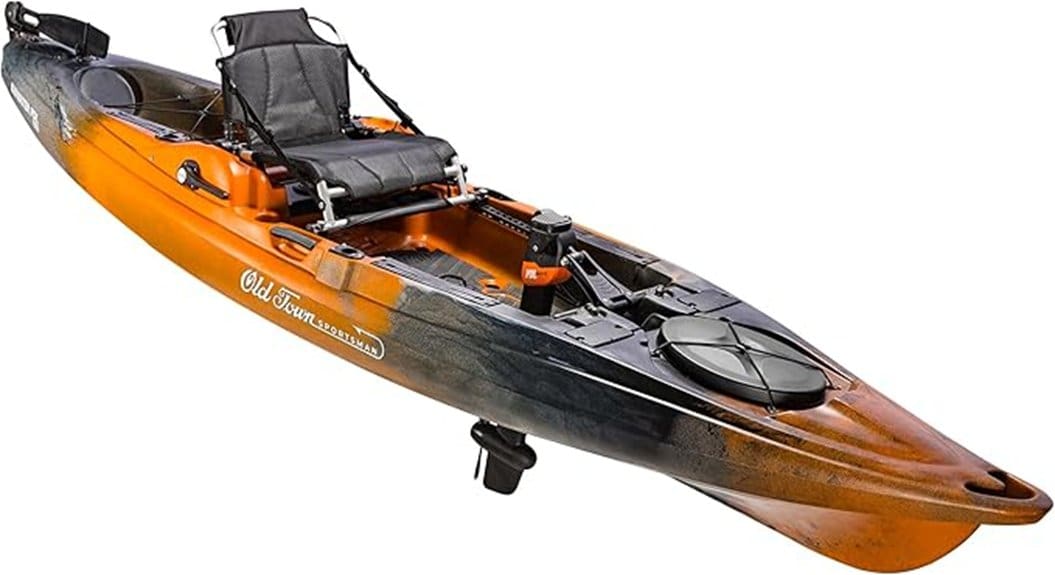
Although the thruster’s 12–48V range and 18 kg max thrust make it broadly applicable, you should match voltage, propeller choice, and power delivery to the platform’s displacement, mission profile, and mounting constraints. For kayaks and small electric boats prioritize lower voltages (12–24V) to simplify Battery selection and keep wiring light; use larger-diameter, lower-pitch props for efficient cruise. For ROVs and workboats opt for 24–48V to access peak thrust, tighter Propeller tuning, and faster response. Scale power delivery to continuous duty vs burst tasks, confirm thermal margins, and choose controllers that protect against overcurrent for unrestricted operation. Consider carrying basic spare parts and safety gear for inflatable kayak trips, such as a patch kit and inflation pump.
Buying, Warranty, Installation Tips, and Common Troubleshooting Points
Start by checking that the thruster's rated voltage and thrust match your platform's continuous-duty requirements and mounting constraints, and keep the original packaging and documentation for warranty verification. When buying, verify seller support, ask about warranty transfers, and confirm return windows. For installation, use specified installation torque on all fasteners, torque to spec, and use threadlocker where recommended. Grounding and sealed cable glands prevent leaks; test in a controlled tank before deployment. If you see overheating, excessive vibration, or reduced thrust, log voltage/current, inspect prop and seals, and contact support with serial and test data for expedited troubleshooting. Also consider the effect of anchor point placement and hull interaction on thrust efficiency when selecting and mounting thrusters anchor point placement.
Some Questions Answered
Does the Thruster Affect GPS or Compass Sensors Nearby?
Yes — the thruster can cause magnetic interference and acoustic noise that affect nearby GPS/compass sensors. You’ll see magnetic distortion from motor magnets and currents, which can bias heading readings if sensors are within a few centimeters to tens of centimeters. Acoustic noise won’t affect GPS signals but can disrupt sonar-based navigation. To minimize effects, you should distance and shield sensors, use ferrite/µ-metal, route power leads carefully, and calibrate compasses in situ.
Can I Paint or Anodize the Propeller or Housings?
Yes — you can change surface finishes, but pick methods compatible with materials and sealing. You can paint the aluminum propeller and CNC 6061 covers if you use marine-grade epoxies or polyurethane and properly mask seals; however avoid thick coatings near balance edges. Anodizing is preferred for aluminum housings for durability and corrosion resistance, but it may void warranty. Use color coding sparingly and test for imbalance, adhesion, and electrochemical compatibility before deployment.
Are Spare Props, Seals, or Repair Parts Sold Separately?
Yes. You can buy replacement props, maintenance kits, seal cartridges, and other repair spares separately. The seller stocks individual propellers and standard seal cartridges for routine servicing; maintenance kits bundle seals, fasteners, and bearings for field repairs. You’ll want to confirm part numbers (manufacturer Luqeeg) and compatibility before ordering. Keep torque specs and shaft tolerances handy; swapping parts promptly preserves thrust performance and prevents water ingress.
Is the Unit Compatible With Canned-Sensor Speed Controllers?
Yes — you can pair it with canned-sensor speed controllers if the controller supports brushless underwater motors and your wiring uses waterproof connectors. You’ll need to verify sensor compatibility (Hall or encoder) and secure the ESC’s voltage/current ratings match the 12–48V range and peak thrust demands. Calibrate PWM carefully: perform pwm calibration and throttle range checks topside before deployment to avoid sudden surges. Keep connectors sealed and test thermal behavior.
Can It Be Used in Saltwater Long-Term Without Special Maintenance?
No — you shouldn't expect long-term saltwater use without special maintenance. The aluminum covers and alloy propeller resist corrosion but saltwater accelerates degradation; you should implement corrosion monitoring and install sacrificial anodes. Inspect seals, coils, and motor housing periodically, flush with fresh water after use, and track current draw/temperature trends. With a maintenance regimen you’ll preserve efficiency and service life; neglect will shorten operational lifespan markedly.