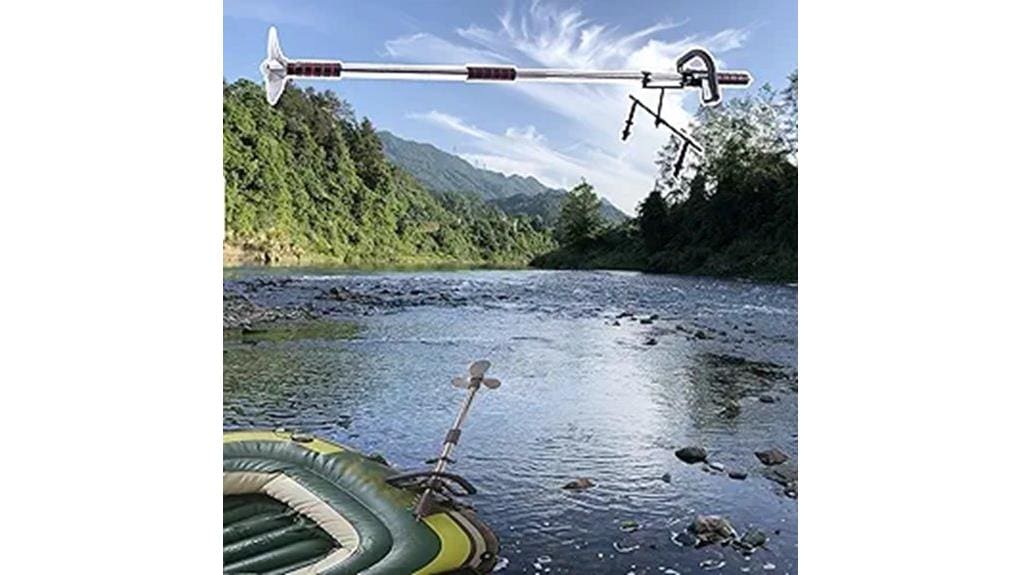
You’ll get a compact, aluminum alloy prop that turns most cordless drills into a usable motor for kayaks, canoes, inflatables and small dinghies; it delivers modest thrust for a few mph, runs on your drill battery, and emits a steady whine at higher RPMs. Mounting clamps fit rails or transoms but check left/right rotation and clamp thickness first. Expect routine corrosion care and limited endurance versus a dedicated trolling motor—keep going to see setup, performance tests and maintenance tips.
Some Key Takeaways
- Measure real thrust with your drill and battery; advertised RPMs rarely predict actual boat speed or endurance.
- Check clamp/bracket fit for your hull (rail thickness, transom shape) and confirm left/right prop rotation for correct yaw control.
- Test battery compatibility, run a low‑RPM bench check, and secure the drill before first on‑water use.
- Expect moderate noise, limited continuous run time, and best use for short trips, maneuvering, and emergency backup.
- Maintain aluminum shaft and blades: rinse, dry, inspect for cracks, lubricate, and sharpen blades when thrust drops.
Real-World Performance: Speed, Thrust, Battery and Drill Compatibility, Noise, and Handling
Measure performance by focusing on thrust and real-world speed rather than marketing claims: with most cordless drills the propeller produces modest thrust suitable for displacement speeds typical of canoes, kayaks and small dinghies, pushing a lightweight craft at a few miles per hour and offering reliable low-speed maneuvering and drift control. You’ll run speed tests to verify thrust measurements across drills and batteries. Check battery compatibility and drill fitments before launch. Monitor noise levels at varying RPMs; expect moderate whine. Evaluate handling ergonomics of shaft and handle under load. You’ll prefer simple, durable setups that extend your range and independence on water. Include a compact hand bilge pump for safety and quick water removal essential for kayakers.
What Fits Your Boat: Mounting Options, Left/Right Installation, and Suitable Watercraft List
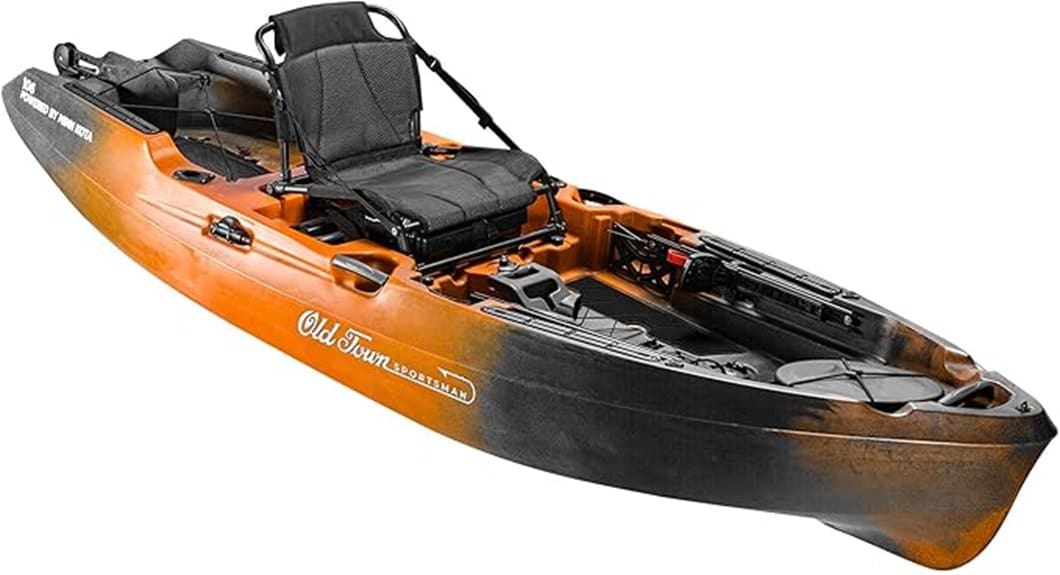
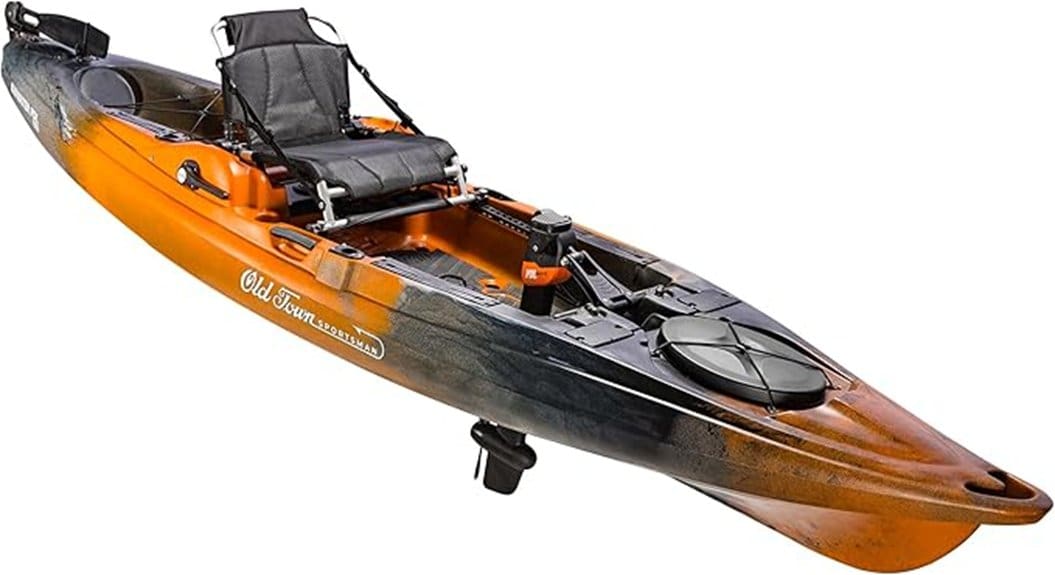
After testing thrust and handling, you’ll need to decide how to attach the drill propeller to your boat and which side to mount it on. Assess side mounting versus stern or bow installation based on hull shape, balance, and control. Choose left/right prop rotation to counteract yaw; mount on the side that minimizes rudder correction and keeps weight centered. Suitable watercraft include canoes, kayaks, dinghies, fishing boats, rafts, pontoons, paddleboards, SUPs, and small sailboats. Prioritize clamps that match rail thickness and transom profiles. You’ll favor setups that allow quick removal, secure hold, and predictable steering. For sit-on-top kayakers, select clamps and attachments designed for rail and transom compatibility to ensure a stable, easy-to-remove installation.
Installation and Setup Steps for Cordless Drills and Included Clamp/Bracket
When you’re ready to fit the drill propeller, start by inspecting the clamp/bracket and your drill’s chuck to confirm compatibility and remove any debris or corrosion. Verify drill battery charge, select low RPM mode, and run a brief bench spin test. Mount the bracket to the gunwale or transom, tighten fasteners evenly, and confirm tool orientation so the shaft exits parallel to the waterline. Insert the drill, secure the chuck, and lock any bracket safety pins. Complete a pre-launch safety checklist: kill switch plan, clear prop arc, and communication signal. Trial at low speed, adjust angle, then proceed. Also consider how using detachable kayak cart components can simplify transport and storage.
Durability, Maintenance, and When to Choose This Over a Traditional Trolling Motor
Although lightweight, the aluminum-alloy shaft and blades are engineered for repeated impact and corrosion resistance, so you can expect reliable service with routine care. You’ll monitor material fatigue via routine inspections after each outing, looking for microcracks at joints and shaft bends. Clean salt or debris, dry thoroughly, and apply light lubricant to moving parts to maintain corrosion resistance. Rotate blade sharpening into your maintenance schedule if performance drops; follow measured angles to preserve balance. Choose this detachable propeller option when you want portability, low cost, and emergency redundancy instead of steady long-duration trolling power. Pack a compact multi-tool to handle basic adjustments and emergency repairs on the water, such as tightening loose fasteners or sharpening blades with a file multi-tool.
Pros, Cons, and Who Should Buy This Detachable Drill Propeller
If you need a compact, low-cost thrust solution for short trips or emergencies, this detachable drill propeller gives you portable propulsion that’s easy to mount and maintain. You’ll get benefits: lightweight aluminum construction, rust resistance, quick clamp mounting, and compact portable storage for minimal gear. It’s ideal as an emergency backup or occasional motor for kayaks, canoes, SUPs, and small boats when freedom to roam matters. Downsides: limited thrust compared with dedicated trolling motors, dependency on drill battery life, and reduced control at high speeds. Buy it if you prioritize simplicity, low cost, and redundancy over peak performance. It’s a useful option for inflatable kayaks as part of your essential gear kit.
Some Questions Answered
Can It Be Used in Saltwater Without Additional Corrosion Protection?
Yes — you can use it in saltwater, but you shouldn’t leave it unprotected long-term. You’ll want to contemplate material compatibility: aluminum alloy resists rust but still corrodes in salt. Attach a sacrificial anode to reduce galvanic corrosion, rinse thoroughly with fresh water after each use, and store dry. These steps preserve performance and freedom to roam waterways without constant maintenance or unexpected failures.
Is It Legal to Use in Regulated Fishing Tournaments?
It depends — you’ll need to verify tournament legality with each event organizer and consult specific rule interpretation documents. Many regulated fishing tournaments prohibit motors or require disclosure; others allow emergency or auxiliary propulsion if declared. Methodically check rules, contact officials, and document intent to use as backup. If allowed, follow placement, power, and use restrictions precisely to avoid penalties and preserve your freedom to compete within regulation.
Does It Interfere With Fish-Finding Electronics or GPS Units?
No, it shouldn’t cause signal interference with fish-finding electronics or GPS if you maintain proper separation and grounding. You’ll avoid magnetic interference by keeping the drill motor and wiring a few feet from sensors and ensuring sensor calibration after installation. Test electronics before departure; if you see anomalies, reposition the unit or add ferrite clamps. You’ll preserve navigation and sonar accuracy by following these simple, methodical checks.
Can the Drill Propeller Be Left Mounted During Trailering?
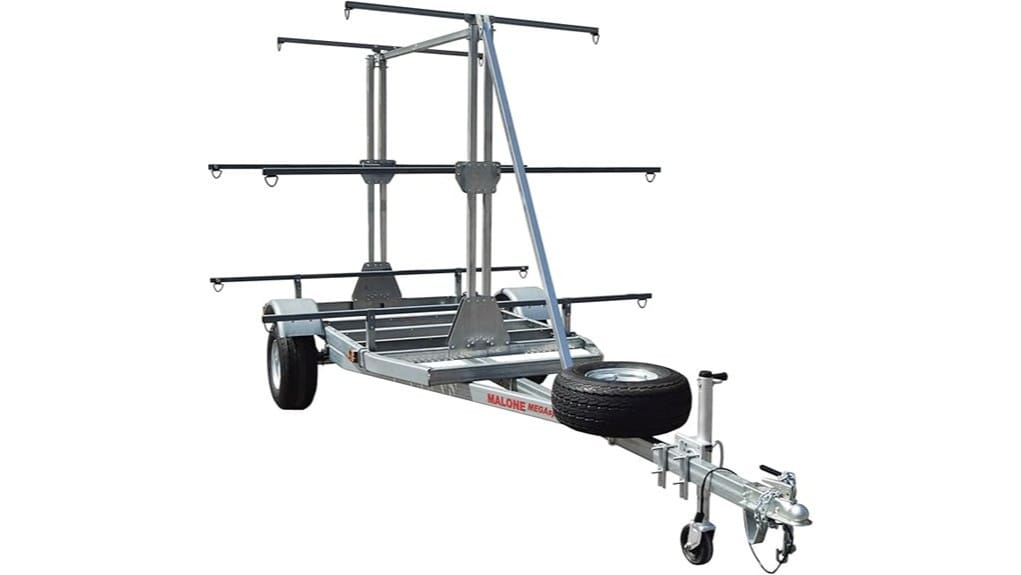
No — you shouldn’t leave it mounted while trailering; remove the propeller for propeller removal and trailering safety. You’ll detach the unit, secure blade and shaft in padded storage, and clamp the bracket separately. Leaving it on risks impact damage to blades, fasteners, and hull, and increases snag hazards. Follow a quick checklist: power drill off, unscrew clamp, stow components, verify tie-downs before transit for freedom on the road.
Are Replacement Blades and Clamps Sold Separately?
Yes — replacement blades and replacement clamps are available separately from many sellers. You can order spare replacement blades for wear or damage and replacement clamps if mounting hardware deforms or is lost. Inspect shaft fit and clamp diameter before buying to confirm compatibility with your drill and hull. Keep spares in your kit so you can swap parts quickly on trips, maintaining propulsion freedom without needing full unit replacement.