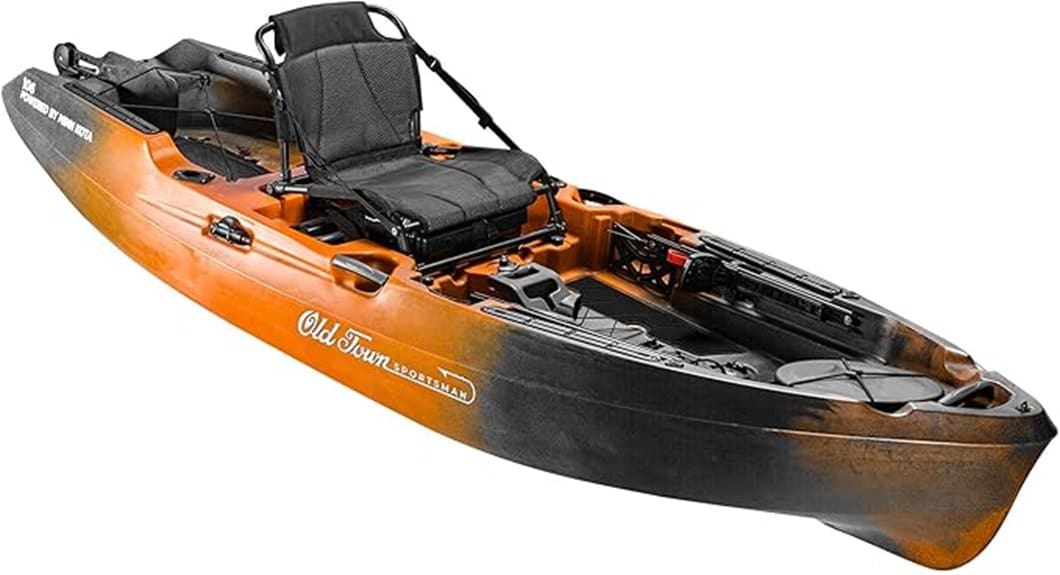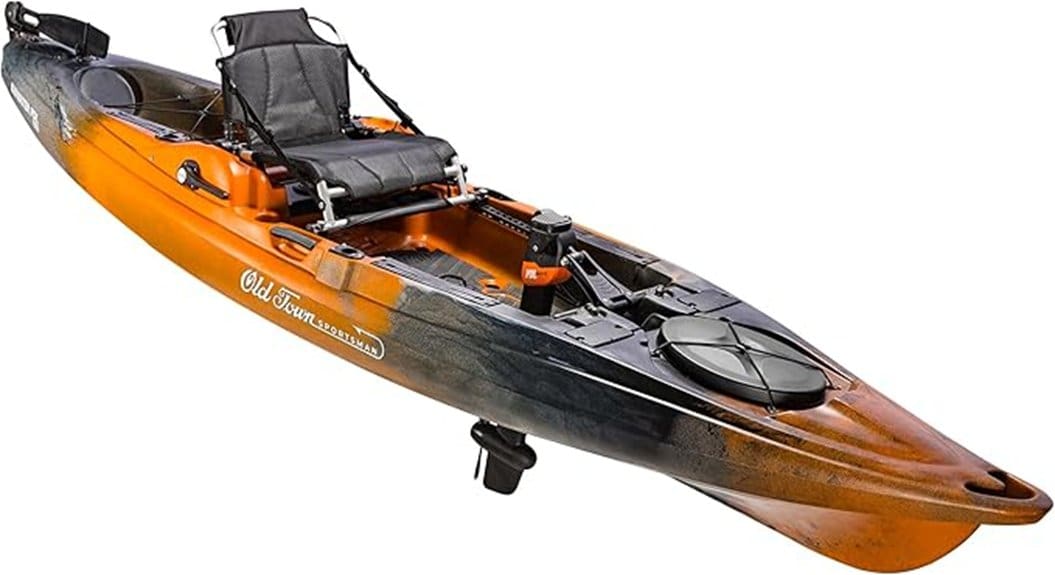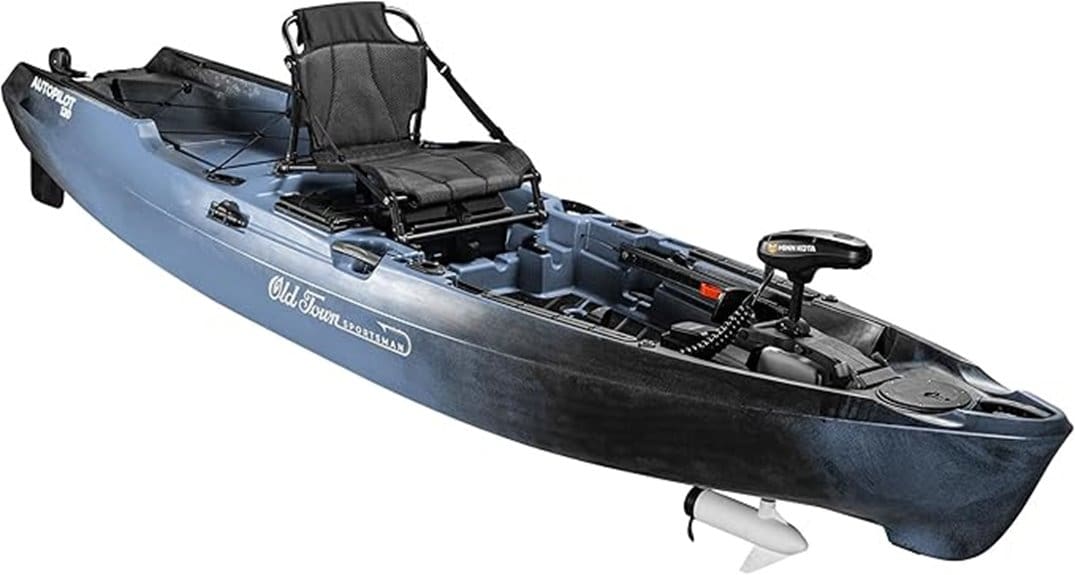
You’ll get a stable, motorized 12-ft sit-on-top built for saltwater flats, with a 558 lb max capacity and 331 lb usable payload that suits serious anglers carrying heavy gear. It includes a removable 24 lb Minn Kota console with i-Pilot GPS Spot-Lock for precise station-keeping and crisp tracking; handling is steady with an extra-large rudder. Comfort features and accessory tracks support long sessions, but battery weight and transport logistics matter—keep reading and you’ll find full pros, cons, and alternatives.
Some Key Takeaways
- Stable, motorized 12-ft sit-on-top kayak with Minn Kota i-Pilot GPS, Spot-Lock, and precise low-speed tracking for saltwater fishing.
- Usable payload about 331 lb (max capacity 558 lb), limiting gear and passenger choices for long trips.
- Removable 24 lb motor console and lightweight 152 lb hull ease transport but require proper vehicle tie-downs.
- Fishing-focused comforts include ventilated Textilene seat, cushioned floor pads, rod holders, tackle box, and accessory tracks.
- Ownership costs include separate marine battery, maintenance for Minn Kota system, and trade-offs versus lighter pedal or inflatable alternatives.
Real Specs at a Glance
Take a quick look and you’ll see the AutoPilot 120 Solo balances compact size with substantial payload: at 12 ft long and 152 lb dry weight, it supports a maximum capacity of 558 lb (usable capacity for people plus gear is 331 lb). You’ll note saltwater-ready Minn Kota propulsion, removable 24 lb motor console, and accessory tracks that outclass many solos. Compare noise levels favorably against heavier rigs thanks to electric thrust. Plan maintenance intervals for motor and hull to protect resale value. Removable components simplify seasonal storage and transport, keeping the boat ready for spontaneous, independent outings. Beginner kayakers should carry essential gear like a personal flotation device for safety and convenience.
How It Handles on the Water
When you push off, the AutoPilot 120 Solo tracks predictably thanks to its extra-large rudder and Minn Kota GPS-assisted thrust, giving you crisp course-keeping at slow trolling speeds and confident correction in wakes. You’ll notice superior tracking stability compared with single-rudder designs; the hull and rudder work together to resist yaw from waves or motor torque. Low speed maneuvering is precise — i-Pilot inputs translate to immediate heading changes and Spot-Lock holds position accurately. Weight distribution and removable motor console fine-tune responsiveness. In open water you’ll favor its steady, controlled feel; in tight spots it responds with deliberate authority. It's also well suited for paddlers using waterproof charts and marine navigation aids like waterproof marine charts to plan routes and avoid hazards.
Comfort and Fishing Setup
You’ll sit and fish with purpose: the premium dual-layer Textilene mesh seat keeps you cool and supported for long sessions and detaches for transport, while cushioned floor pads reduce fatigue and improve grip during casts and retrieves. You’ll notice superior seat ventilation compared with closed-foam designs, preserving energy on hot days. Adjustable foot braces and elevated platform give stable casting stance. Storage layout prioritizes efficiency: a custom tackle box, multiple rod holders and accessory tracks enable tidy rod organization and fast rig swaps. Overall, the setup balances comfort and workflow so you can cruise, lock, and fish with autonomy. Designed to pair well with stadium-style kayak seats, the Sportsman AutoPilot 120 enhances long-session comfort and gear organization.
Practical Limits and Ownership Costs
Comfort and storage make long days productive, but they don't erase practical limits and ongoing costs you should plan for. You’ll face payload and transport constraints: 331 lb usable capacity limits gear selection and a 152 lb hull weight affects vehicle tie-downs. The Minn Kota motor needs a separate battery, so budget for battery maintenance, periodic replacement, and secure mounting hardware. Removable console adds convenience but is another component to service. Compare total cost of ownership against lighter pedal or inflatable alternatives when valuing freedom to range widely. Factor expected depreciation to estimate resale value before purchase. Consider adding dedicated beach wheels for easier shore launches and over-sand transport.
Who Should Buy It and Alternatives to Consider
If you need a stable, motorized sit-on-top for serious saltwater angling and are willing to accept higher weight and ownership costs, the AutoPilot 120 Solo fits that niche. You’ll benefit if you prioritize GPS Spot-Lock, Minn Kota i-Pilot control, large payload for gear, and freedom to fish remote flats. Consider battery options carefully — you'll need a marine deep-cycle battery and plan for charging and weight. If launch logistics or transport limit you, lighter kayaks or pedal-powered alternatives offer easier handling. Compare to lighter touring kayaks, pedal rigs, and powered skiffs to match range, load, and mobility. Check essential gear for inflatable kayaks like pumps, PFDs, and carry bags to make transport and storage easier, especially when managing weight and logistics for motorized boats essential gear.
Some Questions Answered
Does the Motor Battery Fit Inside the Kayak or Attach Externally?
The motor battery attaches externally rather than fitting inside the hull. You’ll use an external mount or underdeck attachment area near the removable motor console; internal mounting isn’t provided for the main motor battery. Comparatively, this keeps usable capacity and interior space free for gear and passengers while allowing easier service and ventilation. If you want secured internal storage, you’ll need aftermarket solutions, but factory design favors external battery placement for freedom and accessibility.
Can I Transport It on a Standard Car Roof Rack?
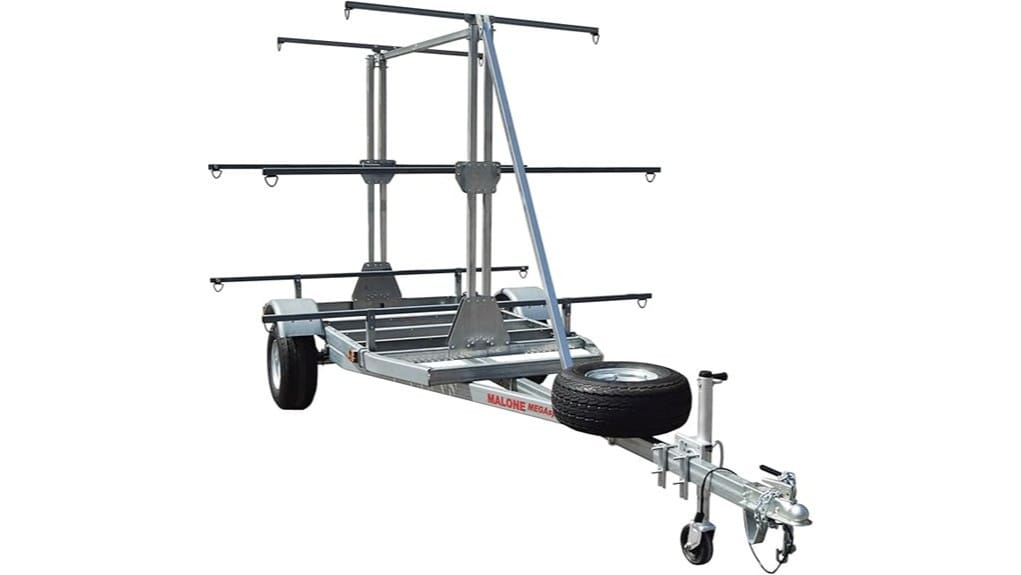
Yes — you can transport it on a standard car roof rack if you use proper roof carriers or foam blocks and secure tie-downs. At 152 lb you’ll need sturdy crossbars and two people to lift; compare rack weight limits to the kayak’s weight. Remove the 24 lb motor console to reduce load during loading, then remount. Use bow/stern straps and transom tie-downs for stability and freedom on the road.
Is the Paddle Included With Purchase or Sold Separately?
No, the paddle’s sold separately. You’ll rely on the Minn Kota motor for propulsion but should master paddling techniques as backup and for tight maneuvers; compare manual control to Spot-Lock GPS holding and extra-large rudder responsiveness. Plan accessories around your desired freedom: battery lifecycle affects how often you’ll switch to paddling versus motor use. Bring a lightweight paddle, considering transport and emergency redundancy despite the motor’s capabilities.
How Difficult Is Removing the 24 Lb Motor Console Alone?
You can remove the 24 lb motor console solo with moderate effort. Use a proper single person lifting technique: bend knees, keep motor balance close to your core, and pivot with hips. Compare using two people versus solo—two is easier, but solo is feasible with careful footing. Secure tie downs before and after removal, and stow the console low and forward for transport. You'll retain freedom while minimizing strain.
Are Replacement Textilene Seat Covers Available Separately?
Yes — you can get replacement Textilene seat covers separately; manufacturers and aftermarket suppliers offer replacements. You’ll compare fabric grades, UV resistance, and textilene maintenance needs before buying. Pick from limited color options or custom tones depending on supplier; prices vary with stitching and reinforcement. You’ll want a cover matching the dual-layer seat dimensions and attachment points to preserve comfort, cooling performance, and long-term durability for independent use.