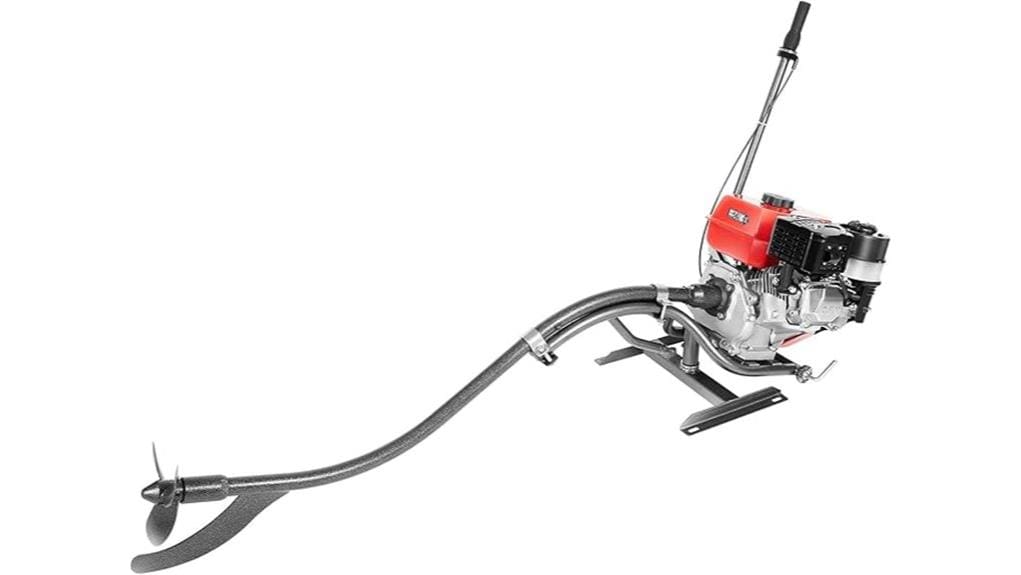
You’ll get a dependable 7.5 HP (4.3 kW) 4‑stroke outboard that’s built for small skiffs and jon boats, with a 212cc TCI engine, air cooling, and a three‑blade prop tuned for steady thrust. It starts manually, offers stepless throttle control, and returns efficient fuel use for over three hours on the 0.95‑gal tank. Aluminum housing and marine hardware simplify maintenance; parts are available for routine service. Keep reading for detailed performance, mounting, and care tips.
Some Key Takeaways
- HASANEN GB200 7.5HP 4-stroke delivers reliable cruising power with useful top speed near its 3600 rpm limit on light skiffs.
- Fuel-efficient design (≤0.87 lbs/kW·h) and 0.95‑gal tank provide over three hours runtime for typical use.
- TCI ignition and stepless throttle give direct throttle response and precise low-speed maneuvering.
- Aluminum housing, steel mounts, and rubber seals offer good corrosion resistance with recommended post-use rinsing.
- Easy transom installation, simple manual start, and routine maintenance every 25–50 hours suit anglers and small-boat owners.
Quick Verdict and Key Specs for the 7.5HP 4-Stroke Outboard Motor
If you need a compact, reliable kicker for small craft, the HASANEN GB200 7.5HP 4-stroke delivers practical power and efficiency. You get a compact overview: 212cc 4-stroke, TCI ignition, air-cooled design, 6.3‑in three‑blade prop, 0.95 gal tank, manual operation and engine mount. Quick specs: 7.5 HP (4.3 kW), ~3600 rpm, fuel consumption ≤0.87 lbs/kW·h, runtime >3 hours, 180° steering, stepless throttle. Aluminum housing and steel bracket resist corrosion and impact. Installation is simple; controls are straightforward. You’ll appreciate dependable performance that provides reliable boating options for your small boat choices. For anglers and small-boat enthusiasts, pairing this motor with the right gear can improve maneuverability and safety on the water; consider kayak power poles and other essential accessories.
How the GB200 Performs on the Water: Speed, Handling, and Fuel Economy
Having covered the basics, let’s look at how the GB200 behaves on the water—its real-world speed, handling, and fuel use. You’ll reach a useful top speed near the 3600 rpm mark on light skiffs; expect practical cruising rather than sprinting. Throttle response is direct thanks to stepless speed regulation and TCI ignition, so you control acceleration precisely. Maneuvering feels confident—180-degree turns and predictable helm feedback support exploration. Propeller efficiency from the three-bladed streamlined design balances thrust and drag. With a 0.95-gal tank and ≤0.87 lbs/kW·h consumption, runtime exceeds three hours, letting you roam farther without frequent refueling. These features make the GB200 a strong match for owners of hard-shell inflatables who are new to kayaking.
Installation, Controls, and Everyday Usability for Small Boats
Get the GB200 mounted and you'll appreciate how straightforward installation and everyday controls make it practical for small boats. You’ll align transom brackets with clear mounting alignment marks, tighten the steel pipe bracket, and secure the engine mount in minutes. The manual start, stepless speed regulation, and simple cruise control are intuitive. Throttle ergonomics place the lever within easy reach for precise low-speed maneuvering and quick power changes. Steering and 180-degree turning are predictable; the streamlined propeller reduces drag. Fuel fills and visual checks are accessible. You’ll get reliable, no-nonsense control that frees you to focus on the water. For safe outings, don't forget essential gear like life jackets and a basic safety checklist to prepare before launching.
Build Quality, Durability, and Maintenance You Should Expect
Because the GB200 uses an aluminum engine housing with steel mounting hardware and rubberized fittings, you’ll see a balance of light weight and corrosion resistance engineered for marine use. Expect factory corrosion testing and vibration analysis data to indicate suitability for freshwater and occasional salt exposure; still rinse after use. Follow a strict maintenance schedule: oil change, spark check, and fuel-line inspection every 25–50 hours. Keep fasteners torqued and rubber seals replaced when hardened. Parts availability is adequate for routine wear items, but order spares before long trips. With basic upkeep, the GB200 stays reliable and keeps you mobile on the water. Kayakers should also consider carrying an electric bilge pump for quick water removal and added kayak safety.
Who Should Buy This Motor : Price, Alternatives, and Final Buying Advice
Although it's not the cheapest option on the market, the GB200 7.5HP 4-stroke outboard gives you a solid mix of power, fuel efficiency, and marine-grade materials that suit anglers and small-boat owners who need reliable, low-maintenance propulsion. You should buy it if you value fuel economy, simple installation, and corrosion-resistant construction for occasional coastal or inland use. Consider budget considerations: the upfront price offsets low fuel consumption and >3-hour runtime on a 0.95-gal tank. If you need lighter weight or higher power, consider exploring alternative engine options like portable 2-strokes or larger 9.9HP 4-strokes before deciding. Many kayakers and beginners also keep backup batteries for GPS and safety gear when heading offshore.
Some Questions Answered
Can This Motor Be Used in Freshwater and Saltwater Without Extra Corrosion Protection?
Yes — the motor's corrosion-resistant aluminum housing and treated steel parts let you use it in freshwater and saltwater, but you shouldn't skip extra protection. You'll want sacrificial anodes fitted and regular rinsing after saltwater use to prevent galvanic corrosion. You can rely on built materials for basic resistance, yet adding anodes, corrosion inhibitors, and routine inspections extends life and keeps performance reliable when you’re free to boat wherever.
Is a Separate Fuel Tank or Line Required for Extended Runs?
Yes — for extended range you’ll want an auxiliary fuel source. The motor’s 0.95‑gallon built‑in tank gives ~3+ hours; for longer runs you should install an auxiliary fuel tank or remote fuel line with proper primer and venting. Use marine‑grade hoses, secure fittings, and a shutoff valve. That setup preserves flow, reduces vapor lock risk, and lets you refuel underway, giving you practical freedom to stay out longer safely.
What Warranty Steps Are Needed for International Buyers?
You’ll register warranty with the manufacturer or seller, follow their international instructions, and provide proof of purchase and photos of the serial number. Shipments may need customs paperwork and original packaging if requested. Keep service records and contact the provider for authorized repair centers or return authorizations. You’ll cover international shipping unless specified; retain tracking and warranty correspondence to preserve coverage and assert your rights abroad.
Are Replacement Propellers or Spare Parts Readily Available?
Yes — you can get Propeller options and Aftermarket parts, though availability varies. You’ll find the stock 6.3 in three-blade prop and aftermarket replacements from general suppliers and online marketplaces. Check fitment to the GB200 shaft specs before buying. Keep spare rubber mounts, brackets and basic consumables on hand; they’re common. Order from reputable sellers, confirm return policies, and carry spares to stay independent on remote trips.
How Loud Is the Motor at Cruising Speed (dB Level)?
You can expect a noise level around 78–84 dB at cruising speed; the acoustic signature is a low-frequency 4-stroke hum with higher-frequency propeller tones. You’ll notice steady mechanical noise but not sharp peaks. That range depends on mounting, load, and boat hull. For quieter operation, you can tweak prop pitch, use vibration-isolating mounts, or add a muffler; those changes will alter the acoustic signature and reduce perceived noise.