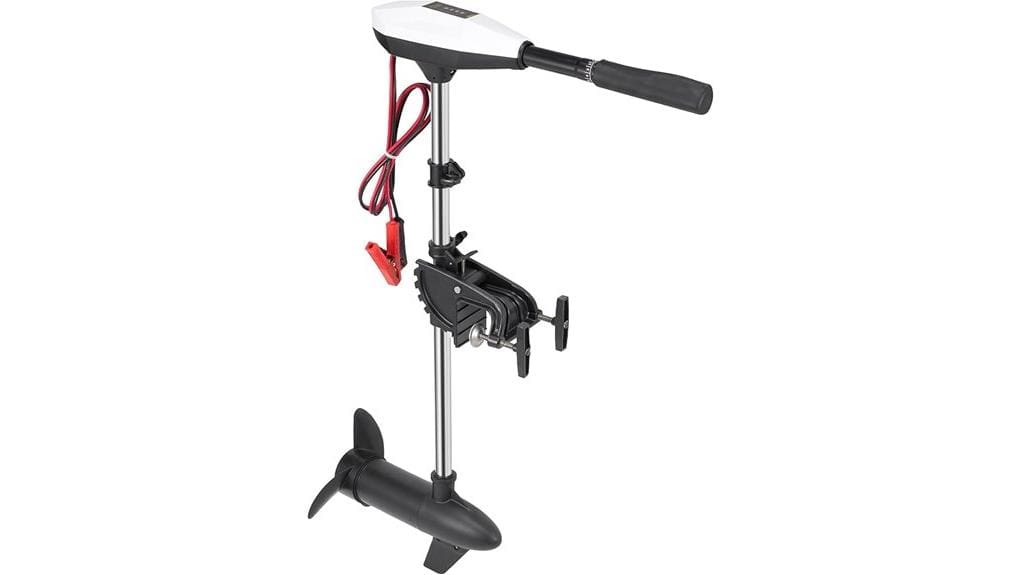
You’ll get steady, quiet thrust from this 55 lb, 8-speed trolling motor that’s built for kayaks and small fishing boats; it uses a three‑blade prop for efficient push, a 30" fiberglass shaft and die‑cast aluminum head for balanced strength, and a 6" telescoping handle with quick release for comfortable steering and fast stow. LED battery feedback and tactile controls give predictable runtime management; it’s freshwater‑only and best for solo anglers — continue for full specs and usage notes.
Some Key Takeaways
- 55 lb thrust provides steady propulsion for kayaks and small fishing boats, roughly 0.5–0.8 HP for cruising and maneuvering.
- Eight-speed controls plus reverse give precise speed control for drifting, currents, and approach while higher gears drain battery faster.
- 6-inch telescoping handle and 30" adjustable shaft allow ergonomic steering and proper prop depth for varying loads and water levels.
- Lightweight 24 lb build with fiberglass shaft and die-cast aluminum head balances portability, durability, and freshwater corrosion resistance.
- LED battery indicator and tactile controls aid runtime management; carry a charged spare and avoid saltwater exposure.
Performance and Power: What 55 LB Thrust and 8-Speed Control Feel Like on the Water
Feel the immediate push: 55 lb of thrust delivers roughly 0.48–0.83 HP, enough to move a loaded kayak or small fishing boat steadily without taxing the motor, while the three-blade propeller converts that power into efficient forward motion with reduced drag. You’ll notice quiet thrust during steady runs; noise stays low and heat build-up is minimized. The 8-speed system gives precise acceleration and reverse control, letting you pick speed for currents or drift-fishing. Expect low vibration maneuvering that preserves battery life and composure. You’ll get reliable, efficient propulsion that maximizes range and on-water freedom. This motor is designed for kayakers and beginner kayaking enthusiasts looking to upgrade to a motor-ready setup.
Handling and Ergonomics: 6-Inch Extendable Handle, 30 Shaft, and Mounting on Kayaks
While the 6-inch telescoping handle gives you quick reach adjustments for steering comfort, the 30-inch adjustable shaft lets you set prop depth precisely for varying water levels and load conditions. You get a compact grip that reduces hand fatigue and improves control during long runs. The handle telescopes with a quick release for fast stow and deployment, so you’ll change reach without tools. Transom mounting keeps the motor low and centered, preserving kayak balance and freedom of movement. Controls remain accessible from seated positions, and shaft length tuning maintains efficient thrust without trimming or repeated repositioning. Choosing the right equipment also means considering compatible safety and rescue gear like throw ropes for kayakers.
Build, Materials, and Durability: Fiberglass Shaft, Die-Cast Head, Weight and Balance
The trolling motor pairs a fiberglass composite shaft with a die-cast aluminum head to balance strength, flexibility, and reliability for frequent freshwater use. You’ll appreciate the shaft’s high bending resistance and light weight, which preserve maneuverability without sacrificing stiffness. The die-cast head provides solid mounting points and consistent gear alignment; its finish improves corrosion resistance in freshwater environments. At 24 lb overall, the assembly maintains a favorable center of gravity for transom-mounted kayaks, aiding stability and responsive handling. Design choices prioritize impact tolerance at common load points, reducing maintenance and extending service life so you can roam freely. This gear selection reflects essentials for inflatable kayak enthusiasts, emphasizing essential gear that supports safe, enjoyable paddling.
Battery, Controls, and LED Indicator: Runtime Expectations, Monitoring, and Operating Tips
Kick the system on and you’ll get instant feedback from the LED battery indicator so you can monitor remaining charge and plan runtime precisely. You’ll operate eight speeds with clear, tactile controls; higher speeds drain batteries faster, so estimate runtime against load and conditions. Perform routine battery maintenance: secure terminals, check water levels (if flooded), and store charged to avoid sulfation. Verify indicator calibration after installation and after battery changes to confirm displayed percentage matches measured voltage under load. Use conservative throttle settings to extend range, watch the LED during long runs, and carry a charged spare battery for true freedom on the water. Consider pairing your motor with a dedicated emergency power bank designed for kayakers to keep electronics and backup power ready while on the water.
Who Should Buy It and Practical Limitations: Best Use Cases, Freshwater-Only Warning, Pros vs. Cons and Value for Money
Who needs this trolling motor and where will it perform best? You should buy this if you run kayaks or small fishing boats on lakes and rivers and value quiet, efficient thrust with low-profile installation. Best use cases: solo anglers, lightweight boaters, and guided trips where weight portability matters. Note the freshwater-only warning: avoid saltwater exposure and follow freshwater maintenance to prevent corrosion and wear. Pros: strong 55 lb thrust, 8-speed control, 30" shaft, LED battery monitoring. Cons: not saltwater-rated, limited top speed, 24 lb mass may still affect small craft. Value: high for targeted freshwater use. Beginners should also consider matching the motor to their craft's weight and stability to choose an appropriate kayak anchor.
Some Questions Answered
Is This Motor Compatible With Kayak Fish-Finder Transducers?
Yes — you can mount a kayak fish-finder transducer with this motor, but you’ll need to plan transducer mounting to avoid prop wash and ensure reliable sonar returns. Position the transducer away from the prop and shaft vibration, using a transom or scupper mount as appropriate. You’ll also check for sonar interference from the motor’s electronics; if interference appears, try grounding, ferrite clamps, or relocating the transducer until readings stabilize.
Can the Propeller Be Replaced With a Different Pitch Blade?
Yes — you can replace the propeller with a different pitch blade to adjust thrust and efficiency. For proper prop selection and performance tuning, choose a blade compatible with the motor’s hub size, RPM range, and three-blade geometry. You’ll preserve balance, avoid cavitation, and protect the gearbox. Test different pitches on calm water, monitor amp draw and speed, and pick the blade that maximizes range and control for your typical load and conditions.
What Warranty Coverage and Customer Support Are Offered?
You get a limited warranty covering defects in materials and workmanship for a defined period; it won't cover misuse, saltwater damage, or normal wear. You'll need proof of purchase for claims. The manufacturer offers phone support for troubleshooting, warranty processing, and replacement-part guidance; expect standard business-hour availability and basic diagnostics. You can escalate unresolved issues through documented channels or seek third-party repair if you prefer independent service options.
How Easily Can the Motor Be Transported and Stored Solo?
You can transport and store it solo with minimal effort. At 24 lb you’ll appreciate the lightweight portability for carrying to shore or stowing in a vehicle. The 30" shaft and 6" telescoping handle collapse for compact storage, and the fiberglass shaft plus die-cast head keep handling predictable. You’ll avoid heavy lifting, fit it into tight spaces, and deploy quickly, preserving freedom to launch and retrieve without extra help.
Are Replacement Parts (Prop, Handle, Head) Readily Available?
Yes — replacement parts are generally available. You’ll find OEM and aftermarket availability for props, handles, and heads through online suppliers and marine parts vendors. Check specs (shaft diameter, mount pattern, prop pitch) for third party compatibility before ordering. Keep fresh‑water service history and model numbers handy to confirm fit. You can usually swap in third‑party components to extend service life, but prioritize parts rated for similar torque and corrosion resistance.