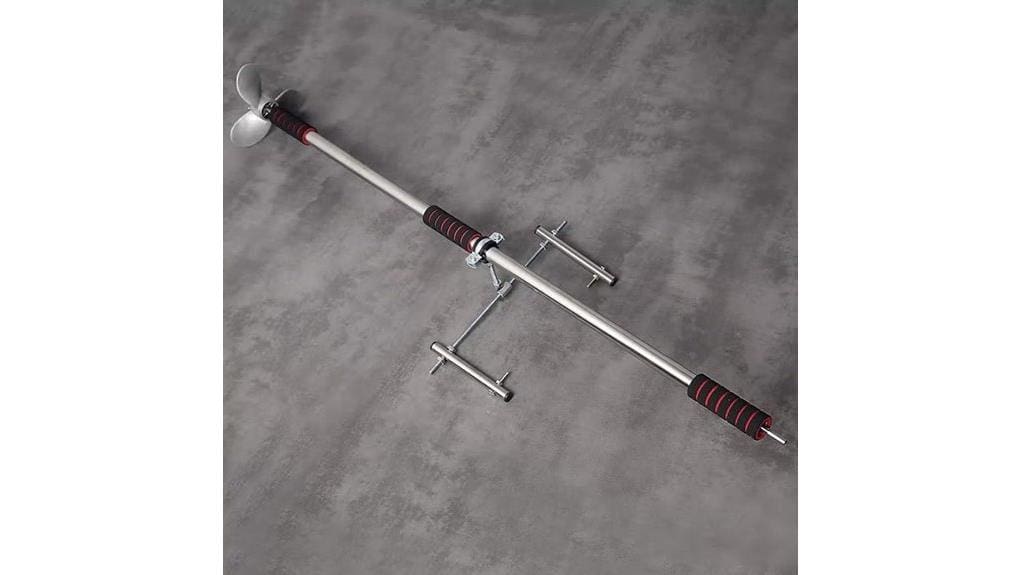
You’ll convert a cordless drill into a compact underwater thruster for kayaks, SUPs, canoes and small boats; it’s aimed at paddlers who want lightweight, short-range propulsion, docking help, or emergency backup. The kit includes a quick-release C-clamp, adjustable bracket, balanced three-blade prop, drive shaft, and corrosion-resistant hardware designed for portability and low maintenance. Expect brisk short bursts, limited battery runtime, and predictable steering via a pivot mount — continue for setup, performance and alternatives.
Some Key Takeaways
- Converts a cordless drill into a lightweight, portable thruster for short-distance maneuvers and emergency propulsion.
- Quick-release clamp and adjustable bracket fit most kayaks, SUPs, canoes, and small boat transoms.
- Brushed-aluminum prop and polymer bearings balance thrust and durability with moderate noise.
- Steering via pivoting mount plus drill throttle offers predictable, responsive low-speed control.
- Best for docking and short transfers; not a replacement for dedicated trolling motors due to limited runtime and thrust.
What This Trolling Motor Kit Is and Who It’s For
Although small in size, this kayak trolling motor steering kit converts a standard cordless drill into a handheld underwater thruster that you can clamp or bracket to a kayak, canoe, paddleboard, or small boat. You get a lightweight propulsion solution that’s portable, mechanically simple, and suited for short-distance maneuvers. It’s aimed at paddlers who want independent mobility, quick docking, or an emergency backup when a paddle or motor fails. Design emphasizes ergonomic handling and straightforward steering via a pivoting mount. Materials and prop size match small-craft requirements, letting you maintain freedom on the water with minimal equipment and rapid deployment. It’s a practical addition for beginner paddlers building an essential gear starter pack.
What’s in the Box and Build Quality (Clamp, Bracket, Prop, Materials)
Opening the box, you’ll find a compact kit designed for quick assembly and rugged use: a C‑style clamp, an adjustable kayak bracket, a three‑blade 16 cm propeller, a stainless/aluminum alloy drive shaft and housing, plus mounting hardware and a short instructional sheet. You’ll notice a quick release latch on the clamp for fast attachment and removal. The bracket accepts wide transoms and uses corrosion‑resistant fasteners. The prop is balanced for thrust and noise reduction. Materials emphasize lightweight durability—aluminum alloy blades, stainless fittings, polymer bearings—so you get portable, reliable backup propulsion with minimal maintenance. It’s also sized to be compatible with most kayaks and all‑terrain carts for easy transport and storage.
How to Mount and Steer It on Kayaks, SUPs, Canoes, and Small Boats
With the clamp, bracket, propeller and fasteners laid out, you’ll mount and steer the unit by securing the clamp or adjustable bracket to your hull, inserting the drive shaft and attaching your cordless drill to the shaft coupling. Position the clamp within its 7.5 cm range or use the adjustable bracket for wider gunwales up to 30 cm; tighten hardware to prevent slippage. Aim the pivot so the prop sits clear of hull turbulence. For steering, pivot the bracket left or right and vary drill throttle; practice small inputs. These mounting and steering strategies provide you with reliable, portable propulsion and confident control. Consider using a lightweight kayak cart for transporting the rig to and from the water to protect your hull and simplify handling kayak cart.
Real-World Performance: Speed, Control, Battery (Drill) Use, and Durability
When you run the trolling motor with a typical cordless drill you’ll get brisk short-burst propulsion suitable for low-speed maneuvering and short transfers rather than sustained cruising; speed depends on drill RPM and prop loading, so high-torque, high-RPM drills produce noticeably faster thrust while lower-power drills struggle under heavier loads. You’ll appreciate predictable directional control via the pivoting mount and ergonomic handle; responsiveness scales with prop efficiency and hull resistance. Check battery compatibility—full-charge drills extend useful run time but expect limited durations. Aluminum build resists corrosion; routine inspection prevents wear. Noise levels are moderate, acceptable for quiet outings. Many kayakers pair these setups with compact solar charging solutions to extend on-water power using solar chargers.
Should You Buy It? Use Cases, Limitations, and Alternatives
Although this drill-powered trolling kit won't replace a dedicated electric motor for long-distance cruising, it gives you a compact, cost-effective option for short transfers, docking, emergency propulsion, and reaching nearby fishing spots. You’ll appreciate lightweight portability and simple mounting on kayaks, canoes, and inflatables. Use it where range is short and you value freedom from heavy batteries; check battery compatibility with your cordless drill before purchase. Limitations include limited run time, lower thrust versus true trolling motors, and higher noise level from the drill. Alternatives include small dedicated electric trolling motors for extended range or manual paddles for silent, low-tech control. Many kayakers will also want to consider essential inflatable-kayak accessories like straps, pumps, and repair kits to keep outings trouble-free.
Some Questions Answered
Is a Specific Drill Torque Rating Recommended for Best Performance?
You don’t need a specific torque rating; prioritize drill speed and appropriate bit size for best performance. Use a cordless drill with variable speed control around 1,000–2,500 RPM to match water load and propeller pitch. Choose a bit size that fits the motor adapter snugly to avoid slippage. Higher torque helps at low RPMs for strong thrust, but balance speed and secure coupling to protect the drill and propeller.
Can the Motor Be Used in Saltwater Without Extra Corrosion Protection?
You can use it in saltwater, but exercise saltwater caution: aluminum alloy resists corrosion but isn’t immune. Rinse thoroughly with fresh water after each use, dry and lubricate moving parts, and inspect fasteners. For extended or frequent saltwater exposure fit sacrificial anodes and consider additional coatings or stainless hardware. You’ll preserve performance and longevity by treating the unit proactively rather than assuming inherent saltwater immunity.
Are Replacement Propellers or Spare Parts Available Separately?
Yes — you can get replacement propellers and spare parts separately. You’ll find aftermarket props and maintenance kits compatible with the aluminum alloy thruster, including 3-blade replacements, shaft components, clamps and seals. Order parts that match blade diameter and drill-coupling specs. Keep a maintenance kit aboard for field repairs and corrosion prevention. That lets you remain independent on the water and restores propulsion quickly after damage or wear.
How Loud Is the Unit During Operation at Typical Speeds?
You’ll hear moderate motor noise at typical speeds, roughly comparable to a cordless drill under load; it’s audible but not overpowering. Cabin resonance is minimal on open kayaks or small boats, though enclosed hulls can amplify vibrations. You’ll notice steady broadband hum and prop wash frequency peaks; mounting tightness and rubber isolation reduce resonance. For freedom-focused paddlers, it’s functional and portable, not stealthy for ultra-quiet stealth runs.
Can It Be Legally Used on Waterways With Motor Restrictions?
Possibly — you’ll need to check local legal considerations and permit requirements before using it on restricted waterways. Many jurisdictions classify handheld, drill-powered thrusters as non-motorized or auxiliary, but some treat any powered propulsion as a motor requiring registration, permits, or bans in certain zones. You should confirm rules with local marine authorities, carry required documentation, and avoid areas explicitly prohibiting powered devices to stay compliant and free to operate.