A tandem kayak can be great if you want shared power, extra gear space, or to bring a partner, kid, or dog, but it needs matched weight, simple communication, and a plan for transport and storage, so check the boat’s capacity, roof length, and put the stronger or more experienced paddler in the stern to steer; practice synced strokes and bring spare PFDs, tie‑downs, a bilge pump, and a dock cart for launches—keep going and you’ll pick the right type and setup.
Some Key Takeaways
- Tandems are ideal if you need higher weight capacity for partners, kids, dogs, or lots of overnight gear.
- Choose tandem when shared power and steady speed on long flatwater trips beat solo flexibility.
- Put the stronger, experienced paddler in the stern to steer; bow sets the paddling rhythm.
- Expect heavier, longer boats that need two-person lifts, roof-rack checks, or a cart/hoist for transport.
- Match combined paddler+gear weight to capacity, practice synchronized strokes, and agree clear commands before launching.
Can a Tandem Kayak Solve Your Goals or Should You Go Solo?
If you’re trying to decide whether a tandem kayak will actually meet your goals or if you’re better off going solo, start by picturing who and what you’ll usually have with you, because that one image will make the choice clear: if you want to carry a partner, a child, a dog, or a stack of overnight gear, a tandem’s higher weight capacity (often 400–600+ pounds) and two-seat layout will beat a solo for comfort and load-carrying, but if you plan to paddle alone most of the time, crave independent pace and spontaneous turns, or expect frequent solo outings, two single kayaks give you far more flexibility and easier handling. If you pick a tandem, plan seating: put the stronger, more experienced stern paddler in back to steer and correct, let the bow paddler set rhythm, practice synchronized strokes for speed, and expect bulkier transport; if you value freedom to go when you want, choose a solo kayak. Tandem kayaks are a popular choice for 2 paddler kayaks among outdoor enthusiasts who enjoy adventures on the water.
Who Benefits Most From Tandem Kayaks (Families, Couples, Beginners)?
If you want family outings to go smoother, pick a roomy tandem with a stable sit-on-top hull and a booster or secure spot for kids or pets, bring a spare PFD in the stern, and practice loading and unloading from shore so getting everyone settled is quick. If you’re a beginner, ride with a more experienced paddler in the stern who can steer and coach your stroke, start on calm water, and focus on balance and timing while you get comfortable with a longer boat. Remember to keep in mind weight balance and pace before you head out—if partners differ a lot, adjust seating or try short trips first so you can fix tracking problems and still enjoy the day. Consider adding a kayak crate system to organize gear and keep essentials secure during your trip.
Family Outings Made Easier
You’ll often find a tandem kayak makes family outings a lot simpler, because one boat lets you keep kids or a small pet close while you paddle, carry less gear, and manage just one hull for transport and storage. Think about choosing a stable tandem kayak with extra storage space for snacks, life jackets, and a small dry bag for phones, place the stronger rear paddler in back to steer and balance, and plan routes that match your slowest paddler so everyone enjoys the trip. Bring sunscreen, a simple first-aid kit, and a spare paddle, communicate roles before launch so your paddling partner knows when to steer or rest, and practice easy turns near shore until you feel free and confident on the water. Tandem kayaks also let couples share the paddling workload and enjoy coordinated trips together, especially when you pick a two-person kayak designed for stability and storage.
Beginners Gain Confidence
Starting out paddling with a partner can take the worry out of those first trips, letting you focus on learning strokes and spotting wildlife instead of balancing a lone kayak, because a tandem’s wider hull and shared power make capsizing less likely and longer outings more comfortable. You’ll feel safer as a beginner in a tandem kayak, since stability comes from width and two paddlers, and you can practice basics without fear. Sit as the front paddler to set an easy stroke, let an experienced stern (back paddler) steer and keep rhythm, and bring simple gear: PFDs for both, spare paddle, dry bag, and a pump or patch kit. Start close to shore, communicate turns, and build distance as you gel; freedom comes when trust and skill grow together. For gear and kayak options suited to tandem paddling, check out our tandem kayak gear recommendations on the Tandem Kayak Gear Guide.
Tandem Advantages: Why Two Paddlers Can Be Faster and Easier
Hop in together and you'll feel how a tandem kayak turns two sets of arms into steady, sustained power, so you can keep a faster pace with less wear on each paddler. When you're paddling in a tandem, the hull's length and load capacity help you track straighter and carry more gear, so you won't fight the bow in calm to moderate water, and you save on transport since one boat replaces two. Learn to paddle in sync: the front paddler sets a steady cadence, the back paddler steers with sweep strokes or stronger opposite-side pulls, and together you sustain higher speeds. For longer trips, let the more experienced paddler take stern navigation while you focus on steady power up front, practice timing, and pack smart. Basic bilge pumps are essential gear for keeping water out of the cockpit and ensuring safety on longer excursions with more gear basic bilge pumps.
Tandem Disadvantages: When Two People Create Friction or Limits
When you paddle a tandem, you’ve got to match pace and rhythm with your partner, because out-of-sync strokes or uneven weight can make the boat rock, slow you down, and force the back paddler into constant steering corrections; start by agreeing on cadence and seat positions before you push off. Think about transport and storage too, since a tandem is heavier and bulkier than a solo—measure your roof rack, check your vehicle’s load limit, and bring straps, a second set of hands, or a cart so you’re not struggling at the put-in. If you plan ahead on who leads, how you’ll handle different paces, and what gear or help you’ll carry, you’ll avoid most friction and keep outings smooth and enjoyable. Consider using a basic kayak cart to make moving your tandem easier from car to water.
Pace And Control
You'll notice right away that tandem paddling asks you to think like a team, because if you and your partner aren't moving together you can lose a lot of speed, waste energy, and spend more time correcting course than enjoying the view. In practice, tandem kayak paddling needs you to set a shared pace before you shove off, agree who handles rear paddler steering, and practice syncing strokes to avoid clashing paddles that kill rhythm. If one of you tires or prefers a different speed, expect frequent course corrections, wider turns, and more effort in wind or current, so bring spare water, a simple hand signal vocabulary, and rehearse a few stroke commands, then commit to them on the water. Consider bringing matching team paddling jerseys to stay comfortable and coordinated on longer outings.
Storage And Transport Limitations
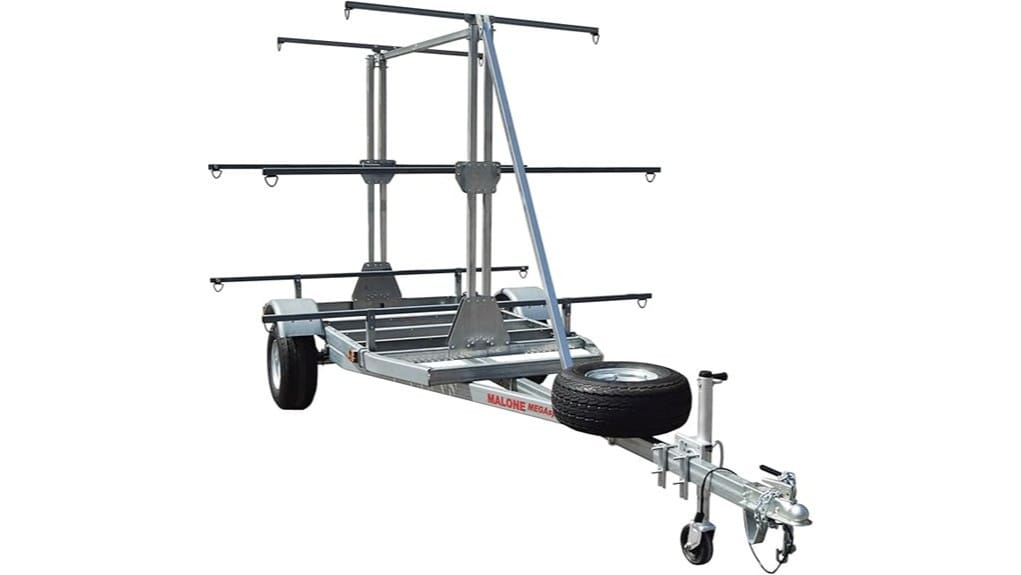
Because tandems are longer and heavier than solo kayaks, you should plan for storage and transport before you fall in love with a model, since lifting a 14–16+ foot boat that’s often 20–30 pounds heavier can mean needing two people, a wheeled cart, or a roof-hoist system instead of just tossing it on your car. Think about where it will live — do you have garage space for a long hull, or will a ceiling hoist be worth the small investment? Check your roof racks for length and weight limits, measure overhang, and consider a trailer or cart if you want solo loading. Remember extra gear like tie-downs, padded cradles, and a dock cart, they make transport easier and keep the freedom you want. Consider investing in an all-terrain kayak cart to simplify moving heavy boats over rough ground and long distances, especially when launching alone, since these carts are designed for easy transport.
How to Match Partners: Weight, Experience, and Seating Roles
If you want your tandem trip to feel smooth instead of like a balancing act, start by matching people for weight, experience, and seating so the boat can track well and both paddlers stay comfortable, for example aim to keep combined paddler plus gear weight about 10–15% under the kayak’s max capacity (so on a 400 lb-rated tandem, plan for ≤350 lb), because leaving a margin helps with stability and performance. Pick the stern seat for the heavier or more experienced paddler so they can steer and use stronger corrective strokes, put the less experienced paddler up front to focus on rhythm, test footrests and backrests for equal legroom and stroke length, and shift heavy gear low toward the heavier side to keep the centerline balanced.
Paddling Technique and Communication That Make Tandems Work
When you and your partner settle into the yak, start by agreeing who’s setting the pace and who’s steering, because that simple plan keeps the boat tracking straight and saves you from tiring out one side, so have the front paddler aim for a steady cadence—something like 60–80 strokes per minute on easy flat water—and the rear paddler match timing and power while watching for chances to make gentle corrections. You’ll want clear communication before you push off, short calls like “Stop,” “Hard left,” or “Switch,” and a plan for steering—rear paddler uses sweep strokes, stronger opposite-side pulls, or short backstrokes—while both keep blades vertical on recovery to avoid collisions, note torso rotation to sync entries, and tell each other about weight shifts so you glide steady, confident, free.
Choosing the Right Tandem: Sit‑On‑Top, Sit‑In, Touring, and Inflatable Picks
You’ll usually start by thinking about where you’ll paddle and how much gear you’ll carry, because that single choice narrows everything else down: for warm, easy days and fishing you’ll want a sit‑on‑top with open deck storage and a high weight capacity so you can haul coolers and rods and still re‑enter easily after a flip, while for windier or cooler trips a sit‑inside will keep spray and chill off you and often tracks better thanks to a narrower hull; planning multi‑day outings pushes you toward a touring tandem that’s longer and sleeker, with hatches, higher payload and either a skeg or rudder for straight tracking, and if you need something ultra‑light for car‑top or travel an inflatable can be a smart choice since it packs down and cuts weight, though it won’t glide as efficiently on long legs. Next, match combined paddler weight plus gear to capacity, try adjustable seats and footrests for comfort, and put the stronger paddler in stern with steering controls so you steer and trim the boat.
Where Tandems Shine vs. When Single Kayaks Are Better
After you’ve picked the hull style and gear layout that fit your trips, it helps to think about where a tandem actually makes life easier versus where a single will serve you better. If you crave long days on flatwater, a tandem lets two paddlers use shared effort to go farther with less wear on each body, and you’ll appreciate the extra storage capacity for camping gear, kids, or a dog, but plan how you’ll load and lift that heavier hull. For freedom to split up, practice solo paddling, because singles offer better maneuverability, lighter transport, and quicker launches. Choose a tandem when one partner needs support or rest, keep teamwork and communication simple, and decide first who steers, who carries what, and how you’ll swap plans on the water.
Some Questions Answered
Who Has More Control in a Tandem Kayak?
The stern usually has more control, because stern dominance gives steering authority while the bow sets cadence, so you'll want seat coordination and correct weight distribution, put the heavier or more skilled paddler in back, and use clear communication cues to manage any skill imbalance. Start by agreeing who calls turns, practice sweep and backstrokes together, carry a spare paddle and flag, and rehearse simple drills to keep you both synced and in command.
What Is the 120 Rule for Kayaking?
The 120 Rule says you should keep two paddlers plus gear under about 120% of a solo kayak’s rated capacity, so you’ll check weight distribution, seat comfort, and safety spacing before launch, watch stroke timing and wind effect while paddling, and plan rescue procedures if you take on water, so carry a pump, spare PFD, basic tow line, and weigh yourselves and gear to avoid low freeboard or poor stability.
Why Are Tandem Kayaks Called Divorce Boats?
They’re called “divorce boats” because relationship humor aside, seating dynamics and steering disputes can blow up if you don’t sort things first, you’ll get communication breakdowns when one person steers and the other sets the pace, weight distribution matters for tracking, and poor seating etiquette sparks blame; check roles before launch, put the stronger paddler stern, agree on commands, bring snacks and a whistle, and plan regular rests to keep calm.
Do Both People Have to Paddle in a Tandem Kayak?
No, both people don’t have to paddle; you can solo from the middle or rear seat positions, but expect reduced speed and trickier balance techniques, so shift slightly aft for better trim. Agree on communication signals for starts, stops, turns, and entry exit, decide who steers, and practice paddle synchronization when both join in. Pack a spare paddle, life jackets, and try short trips first to tune weight distribution and timing.