You’ll want to learn a few key words so you stay safe and confident on moving water: PFD (a snug life jacket), spray skirt (keeps water out of a kayak), throw bag (a rescue rope you can toss), bulkheads or float bags (keep a swamped boat afloat), and basic strokes like forward, sweep, brace and the boof for drops, plus how to spot eddies, eddy lines, holes and strainers; practice wet exits, carry a throw bag and knife, and scout lines before you paddle more.
Some Key Takeaways
- PFD: a Coast Guard–approved Personal Flotation Device worn snugly for buoyancy, mobility, and attachment of whistle/knife.
- Forward, sweep, and bracing strokes: core paddle techniques for propulsion, turning, and preventing capsizes.
- Eddy, eddy line, and ferry: water features and maneuvers for resting, crossing currents, and avoiding downstream drift.
- Wet exit and roll: essential self-rescue skills—calmly exit a swamped cockpit or perform a hip-driven roll.
- Throw bag, rescue vest, and tow leash: basic rescue gear used with standardized throw/swim protocols for swimmer recovery.
Essential Safety and Rescue Terms Every Beginner Must Know

Before you push off, get comfortable with a few safety basics you’ll use every time, because knowing them now makes everything else easier and safer. You’ll wear a Coast Guard–certified Personal Flotation Device (PFD) that fits snugly, lets you lift your arms, and won’t ride up if someone tugs the shoulders, and you’ll practice a wet exit until you can do it calm and quick with eyes closed, so a capsize doesn’t surprise you. Carry a 50–70 ft throw bag and practice underhand shots to a swimmer from shore or an eddy line, learn the throw/swim protocol and who calls “swimmer,” and on technical runs use a rescue vest with a tow leash plus a small knife to cut entanglements; consider learning an eskimo roll too. Many water adventurers also keep specialized rescue gear like throw ropes and rescue vests on hand for quick response.
Basic Equipment and Outfitting Words (PFD, Spray Skirt, Bulkhead, Etc.)
Start by getting the gear that actually keeps you safe and comfortable, because a few right choices make every paddle easier: pick a Coast Guard–certified PFD sized for a snug fit that lets you lift your arms and has attachment points for a whistle and knife, try on a spray skirt that seals the cockpit coaming yet still lets you do a calm, quick wet exit, check whether the boat has sealed bulkheads or consider adding float bags so the hull stays buoyant if you capsize, and make sure the seat outfitting — thigh braces and a back band — can be adjusted to lock your hips for better edging and rolling; also verify there are sturdy bow and stern grab loops for carrying and securing the boat, and practice putting on and inflating any float bags at home so you’re not fumbling on the river.
You’ll want a personal flotation device built for moving water, not a casual vest, because mobility matters, and test the spray skirt and wet exit with a partner in shallow water so you know the feel, learn where bulkheads sit and where to stow float bags, and adjust thigh braces and the back band until the boat answers your lean without pinching, that way freedom on the water comes from confident gear choices, not guesswork.
Essential paddling gear includes quality floatation options like sealed bulkheads to keep a swamped boat afloat and make rescues easier.
Core Paddling Strokes and Maneuvers (Forward, Sweep, Ferry, Boof, Brace)
You'll want to get comfortable with a handful of strokes that make most paddling situations easy to handle, so focus first on how your body moves and where your paddle goes: for steady speed, plant the blade near your feet and pull back with rotation from the hips so the forward stroke drives the boat efficiently without tiring your arms; to turn quickly, reach the blade out near the bow and sweep it in a wide arc toward the stern while leaning the boat a bit to help the turn; when crossing current, angle the boat into the flow at about 20–60 degrees and use steady forward strokes plus edging to ferry across without drifting downstream; for drops, time a strong vertical boof stroke at the lip and thrust your hips forward to lift the bow and clear holes; and when things feel unstable, use a high brace with the blade flat and elbows up to resist tipping or a low brace with the blade near the water for quicker, lower-angle support—practice each move in calm water first so you learn the feel of rotation, edge, and timing, then build them into simple sequences so you’ve got reliable responses when conditions get trickier. Choosing the right day touring kayak can make practicing and applying these skills more enjoyable and effective.
How to Read Water: Currents, Eddies, Eddy Lines, Holes and Lines
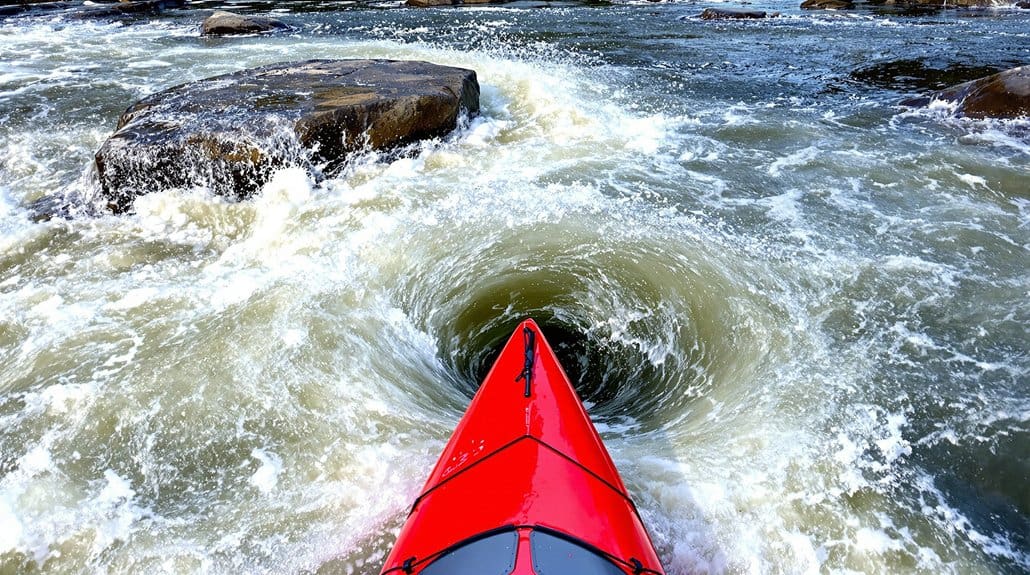
Think of reading water like scanning a road before you drive a tricky stretch, and keep your eyes on the big patterns first: look for the downstream V — that dark, V‑shaped lane pointing to the fastest water — because that usually marks the safest line through constrictions, watch for eddies behind rocks or on the inside of bends where the flow calms and you can rest or scout, and pick out the eddy line, that choppy seam between the main current and the calm pocket, since crossing it wrong will spit you downstream; also learn to spot holes where water pours back on itself, which can give you fun surf or turn into a dangerous catcher depending on size, and watch for strainers and boils which are clear hazards, so practice identifying these features from shore or while paddling slow, carry a whistle and a throw bag within reach, keep your paddle across the deck when ferrying or lining up a boof, and mentally trace a continuous route that links eddies and follows the downstream V while planning exactly where you'll angle, ferry, or peel out if something changes. Before you head out, make sure you have the right gear and resources for a safe trip, including whitewater guidebooks and appropriate kayaks.
Common Whitewater Slang and Conversational Terms to Recognize
When you’re hanging out at the put-in or lining up before a rapid, listen for the slang people toss around—it’ll speed up communication and keep everyone safer, because a quick “boof left, eddy out” or “watch that keeper” says a lot when you don’t have time for a long explanation. You’ll hear boof for popping the bow over a lip, eddy for the calm pocket behind rocks, and eddy line for that seam where things get touchy, so scout for eddies to rest and avoid unstable lines. Know hole and keeper hole warnings, practice your wet exit and roll so you’re ready if you carp, and carry a throw bag, tow leash and float bags, they’re basic, lifesaving kit. For outfitting and gear suited to whitewater paddling, check options for whitewater kayaks and accessories to match your skill level.
Some Questions Answered
What Is the 120 Rule for Kayaking?
The 120 Rule says you plant a strong forward stroke about 1.2 boat lengths before a drop, so your bow rides the lip instead of nosediving, and you thrust hips/feet to “boof” up. You’ll watch stroke cadence, paddle grips, kayak stability and wave reading to time it, check gear maintenance, weather awareness and trip planning before trying, practice entry techniques on small drops, and carry emergency signaling while respecting water etiquette.
What Is the 50-90 Rule in Kayaking?
The 50–90 rule means you lead turns with hip flicks, getting the hull halfway to the desired angle (50), then finish with torso and shoulders to reach the full edge (90), which helps stroke cadence, angle of entry, and boat balance. Practice with gentle forward lean, watch windage effects when edging, use paddle feathering and bracing technique to protect against capsize, feel pressure control, and try eddy hopping to test the timing.
What Are the Three Golden Rules of Kayaking?
The three golden rules are: stay safe, stay with your group, and plan ahead. You’ll carry a gear checklist, know river signals, practice paddle strokes and bow rescue, and have exit strategies and trip planning nailed, including wind strategy and hypothermia prevention, so you’re ready if things change. Don’t paddle alone, keep group etiquette, and check conditions first, scout hazards, communicate, and act calmly if a rescue’s needed.
What Are the Basics of Kayaking?
You learn the basics by choosing kayak types that fit your trips, practicing paddle strokes like forward and sweep, and wearing safety gear, PFD and helmet, every time. Focus on body posture and launch techniques so you enter smoothly, practice wet exits and stroke correction in calm water, and learn water reading to spot river hazards. Plan trips with gear lists, weather checks, escape routes, and leave-no-trace habits.