You want to stay warmer, drier, and safer, so pick a sit‑inside touring kayak with a sealed cockpit, fitted sprayskirt, and bow/stern bulkheads to cut wind chill, trap heat, and keep flotation if you swamp; wear a drysuit or neoprene with layered insulation, neoprene hood, gloves and booties, and carry a pump, paddle float, towline and VHF in dry bags, practice wet‑exits and assisted re‑entries, plan conservative routes and turnaround times — more tips follow.
Some Key Takeaways
- Enclosed cockpit and sprayskirt block wind and spray, dramatically reducing torso heat loss in cold conditions.
- Sealed bow and stern bulkheads provide flotation and dry storage for emergency layers and hypothermia kit.
- Sit‑inside designs allow thicker insulating layers or a drysuit without water flushing the lap.
- Lower seating and snug thigh contact improve edging, bracing, and control in winter chop and gusts.
- Touring sit‑ins make assisted rescues, pumping, and towing easier, reducing exposure time after a capsize.
Why Sit‑Inside Kayaks Beat Sit‑Ons in Cold Weather
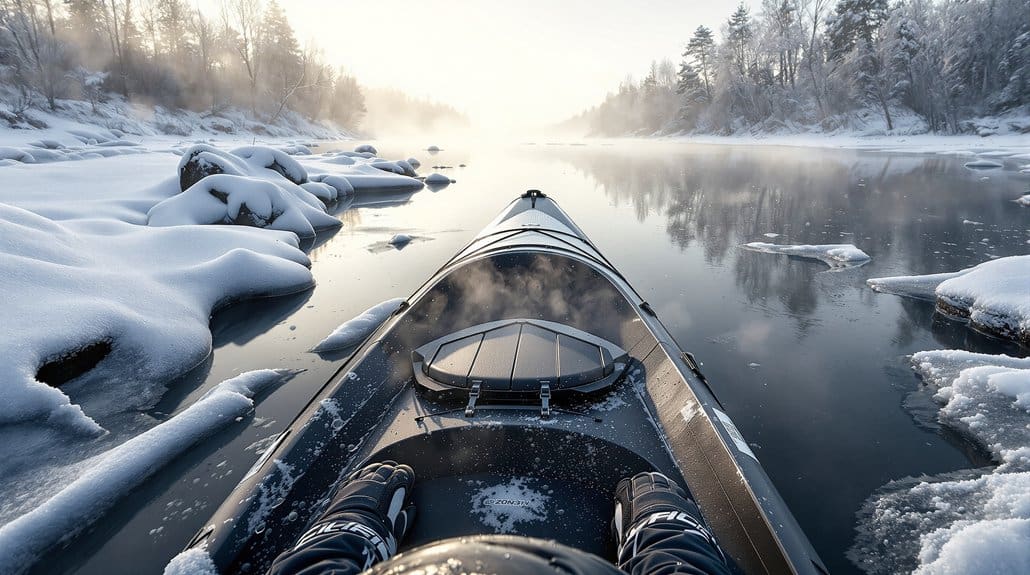
If you want to keep paddling when the air and water are cold, start with a sit‑inside kayak — its enclosed cockpit and a good sprayskirt block wind and spray from your torso, so you lose far less heat than you would sitting exposed on a sit‑on‑top. You’ll notice you can brace better with thighs and footrests, expend less energy, and hence stay warm longer on long crossings, especially in open water where a wet exit could be dangerous. Look for touring models with bow and stern bulkheads for flotation, pack dry bags and an insulated layer inside the cockpit, and choose lighter outer shells since the hull keeps most spray off you. Practice wet exits and re‑entry in warm conditions first. Consider adding kayak floatation bags to increase safety and buoyancy on winter outings.
How Enclosed Cockpits, Sprayskirts, and Bulkheads Keep You Warmer and Drier
Because a sit‑inside kayak seals you into the hull, you stay far warmer and drier than you would sitting exposed, and that really changes how long and safely you can paddle in cold conditions. In a sit-in-side kayak you sit lower, cut wind chill, and the enclosed cockpit plus a fitted sp-rayskirt blocks spray and wind, so you lose far less heat to convection and evaporation; that means you can wear thicker layers, even a neoprene suit or drysuit, without water flushing your lap. Look for bow and stern bulkheads that create sealed flotation and keep water out after waves or a capsize, and use their hatches to stow dry clothes and emergency gear you can reach fast. Choose essential gear like quality paddles and well-fitted life jackets to complement your boat and boost safety on cold-water trips, especially when paddling a sit-inside kayak.
Stability and Control in Chop and Icy Conditions: Edging, Bracing, and Tracking
When chop and icy gusts start to toss your boat around, lean into edging and bracing like they're your steering and safety tools, because a sit‑inside kayak gives you lower seating and snug contact with your thighs and knees so small hip flicks bite into the water and steady your course without widening your footprint. You’ll use edging to bite into waves, hip‑flick to initiate small rolls of the hull, then follow with a corrective sweep stroke to stop yaw, especially in a longer, narrower touring hull that tracks better through gusts. Keep a sprayskirt on to stay drier so bracing works longer, practice low and high braces in calm water, and carry a spare paddle leash for quick corrections. Also carry a compact foot bilge pump for quick water removal and staying safe on extended trips foot bilge pump.
Safety Tradeoffs: Self‑Rescue, Rollover Risks, and When Touring Bulkheads Matter

When you're paddling a sit‑inside, think about how you'll get back in if you flip—practice a wet‑exit and at least one re‑entry method like a T‑rescue or roll, carry a pump and paddle float, and wear a sprayskirt and PFD so you can limit water and stay warm. Remember that big cockpits on recreational models can fill fast and make self‑rescue much harder, while touring kayaks with sealed bow and stern bulkheads keep you afloat even when swamped, letting you tow, pump out, or do an assisted re‑entry instead of swimming. For cold or offshore trips, pick a touring boat with reliable sealed bulkheads, rehearse assisted rescues with a partner, and plan to choose staying with the boat over swimming unless you’re trained and conditions are safe.
Self‑Rescue Challenges
Flipping a sit‑inside kayak and ending up with a full cockpit is one of those lessons you want to learn on a calm practice day, not in cold, choppy water, so start by assuming you’ll need more than brute strength to get back in. If you paddle a sit-in-top or sit-inside boat, check whether it has bow and stern bulkheads, because a sealed hull keeps you buoyant and gives you time to pump or get towed, while a single rear bulkhead can fill and bury you fast. Practice self-rescue drills in warm conditions, carry a pump, paddle float, towline and a quick‑release hip belt, wear a drysuit in winter, and rehearse assisted re‑entries so you can stay free on the water, not stranded. Consider adding an essential hand bilge pump to your kit for quick cockpit drainage after a re-entry.
Rollover And Recovery
If you capsize, you’ll want to know right away whether your boat helps you or makes things harder, so check the cockpit and bulkheads before you ever push off and plan your recovery around what you find; a recreational sit‑inside with a big open cockpit or only a rear bulkhead can fill fast and leave you wrestling to stay afloat, while a touring kayak with sealed bow and stern bulkheads usually stays buoyant and towable, giving you time to pump, strip water, or wait for help. You should practice wet exits, assisted re‑entries, and a roll if you use a skirted sit‑inside kayak, because a confident roll keeps you warm and moving, while an untrained re‑entry into a swamped boat risks hypothermia. Carry flotation, tow lines, pump, and train rescues in calm conditions before winter trips. Consider adding stern floatation bags to increase reserve buoyancy and make recovery easier in rough or cold conditions stern floatation.
Bulkheads For Touring
Think of bulkheads as the kayak’s airbags, they don’t stop a capsize but they keep the boat afloat and your gear from washing away, so the first thing you do before a longer trip is check that the bow and stern hatches seal and that those compartments are dry and firmly attached. In touring kayaks those sealed bulkheads create flotation chambers that make a swamped boat easier to tow or assist, and they protect gear for overnight freedom, but they also change self‑rescue — you’ll usually need a paddle‑float or an assisted re‑entry because the cockpit stays full. Expect less initial stability for greater speed, practice roll and re‑entry skills in safe conditions, and carry a paddle float, towline, pump, and a partner when you push offshore. For whitewater and coastal paddling, choosing the right kayak and equipment from a trusted outfitter can make a big difference in safety; consider checking kayaks and guidebooks before heading out.
Clothing and Gear to Pair With a Sit‑Inside for Winter Paddling
You’ll almost always want to dress for immersion, not for the air temperature, so start by choosing a drysuit with sealed wrist and neck gaskets or, if you don’t have one, a well‑fitted wetsuit paired with a waterproof jacket, because keeping water off your skin is the single best way to cut hypothermia risk when a sit‑inside fills or you go over. Layer base and mid layers in synthetic or merino under your outer shell to trap heat even if you get wet, skip cotton, and add neoprene gloves plus insulated booties to protect fingers and toes. Wear a snug, properly fitted PFD over your outerwear, attach a whistle and waterproof radio or phone in a dry bag, pack a thermal foil or bivy, and practice re‑entry and bilge pump use before heading out. Also make sure you’re carrying a hypothermia kit with essentials like a heat source and emergency blankets to improve survival and recovery chances in cold water; see our hypothermia kits for recommended options.
Choosing the Right Sit‑Inside for Cold‑Water Use: Recreational vs. Touring
You’ve already got the right idea dressing for immersion and practicing re‑entry, so now think about the boat that’ll keep you safer out on cold water, because not all sit‑inside kayaks are built the same for winter conditions. If you want freedom to range farther, choose touring models with two sealed bulkheads and hatches, they keep the kayak afloat if swamped and give dry storage for gear and emergency kit, but they’re longer, narrower, often 12–18+ feet, and demand better edging and re‑entry skills. Recreational boats have big cockpits that make getting back in easier, but without bulkheads they can swamp and are harder to bail. First step: pick a touring hull if you’ll go offshore, add a fitting sprayskirt, deck lines, and practice rescues. Gear up for epic sea kayak adventures with the right expedition-minded equipment and accessories, including durable paddles and safety kit like buoyancy aids and throw bags, to stay prepared on longer cold-water outings with expedition sea kayaks.
Practical Winter Tips: Launch, Capsize Response, and Trip Planning for Sit‑Inside Paddlers

You’ll want to dress assuming you’ll get wet, so wear a drysuit or wetsuit with a high‑quality PFD and layer wool or synthetic clothing, because a sprayskirt leak or capsize in cold water can cause rapid hypothermia. Before you shove off, check bulkheads and hatch seals, stash a small pump, paddle float, throw bag and waterproof comms in airtight hatches, and practice wet‑exit and assisted re‑entry drills in calm conditions so you know the steps if things go wrong. Plan short trips with conservative turnaround times and easy lines to shore, leave a float plan with someone ashore, and rehearse who will do what in a rescue so recovery is quick, calm, and safe.
Dress For Cold Water
Dressing for cold water starts with thinking like a safety-first paddler: wear a proper drysuit rated for cold-water immersion, or at least a sealed drytop with warm insulating layers underneath, because even a short dunk in water under about 10°C (50°F) can knock your functions out in minutes. You’ll want a Coast Guard–approved PFD over that suit, with bulkheads in your sit-inside kayak keeping gear dry, and a hooded neoprene cap and gloves so you stay protected if you flip, not peeling layers on shore to chase freedom. Stow spare layers and electronics in hatches or dry bags, keep a whistle or VHF ready, and practice wet exits and assisted re-entries where you can, calmly.
Launch And Exit Techniques
When you're getting ready to launch in winter, think low, slow, and deliberate: pick a protected spot, set your paddle across the bow for a stable handhold, slide one knee into the cockpit and sit down low before swinging the other leg in so you keep your center of gravity near the hull and don’t slip on ice or wet rocks. Wear a drysuit or wetsuit with layered insulation, check that bulkheads and hatches are sound, and have a tethered paddle float and bilge pump within reach so you can seal the cockpit with a snug spray skirt, bail small amounts, and stay afloat. If you capsize, attempt a wet exit but stay with the kayak, climb onto the stern to stabilize, then use a paddle‑float self‑rescue or T‑rescue to re‑enter rather than swimming.
Plan For Rescue & Recovery
Because winter paddling leaves you with far less room for mistakes, start your rescue planning before you shove off and make it part of the trip, not an afterthought—check that your PFD fits, your drysuit seals, and your spray skirt, paddle float, and bilge pump are stowed where you can reach them without fumbling on ice. You’ll want redundancy, a VHF or waterproof phone, towline and signaling device, and to practice assisted rescues with your group so a T‑rescue or paddle‑float re‑entry becomes second nature, because solo re‑entries are often impossible. Favor bulkheaded touring sit‑ins for buoyancy, plan routes within a conservative swim‑to‑shore range, factor wind and daylight, wear a helmet on icy launches, and rehearse quick, calm steps to get back in or tow out.
Some Questions Answered
Are Sit-Inside Kayaks Better?
Yes, they often are better for cold trips, because enclosed cockpits give cold storage for gear, you get snug paddle control with thigh contact, and thermal layering plus a drysuit keeps you safe; look for touring models with bulkheads and hatches, pack spare paddle, pump, and tow, learn self- and assisted-rescue first, practice re-entry, and avoid big open cockpits unless you’ve trained and carry proper flotation.
What Is the 120 Rule for Kayaking?
The 120 Rule says you won't paddle more than 120 minutes from shore or help, because cold storage of body heat is limited, so you use layering systems and thermal management to stay functional, but you still plan to be within two hours if you capsize. Check seals, carry a pump, wear a drysuit or wetsuit, have a PFD and float plan, practice re-entry, and pick routes, daylight, and weather that keep you safe.
What Is the 50-90 Rule in Kayaking?
The 50–90 rule says you’ll cover about 50% of your body with insulating layers and 90% of exposed skin with wind- and waterproof outerwear to reduce cold immersion risk, so you’ll use layering systems: thermal base and midlayers under a drysuit or drytop, plus waterproof gloves, booties, and a hood for thermal protection; pack a spare dry top or layers, practice self-rescue, and check fit and seals before you head out.
What Are the Benefits of a Sit in Kayak?
You get cold comfort from a sit‑in kayak because its enclosed cockpit blocks spray and wind, you gain better paddle control from thigh braces and lower seating, and you open up real storage capacity in sealed bow and stern compartments for gear and safety kit. Look for bulkheads, a good sprayskirt fit, and comfortable braces, pack a dry bag, wear a PFD and drysuit, and learn self‑rescue drills before you go.