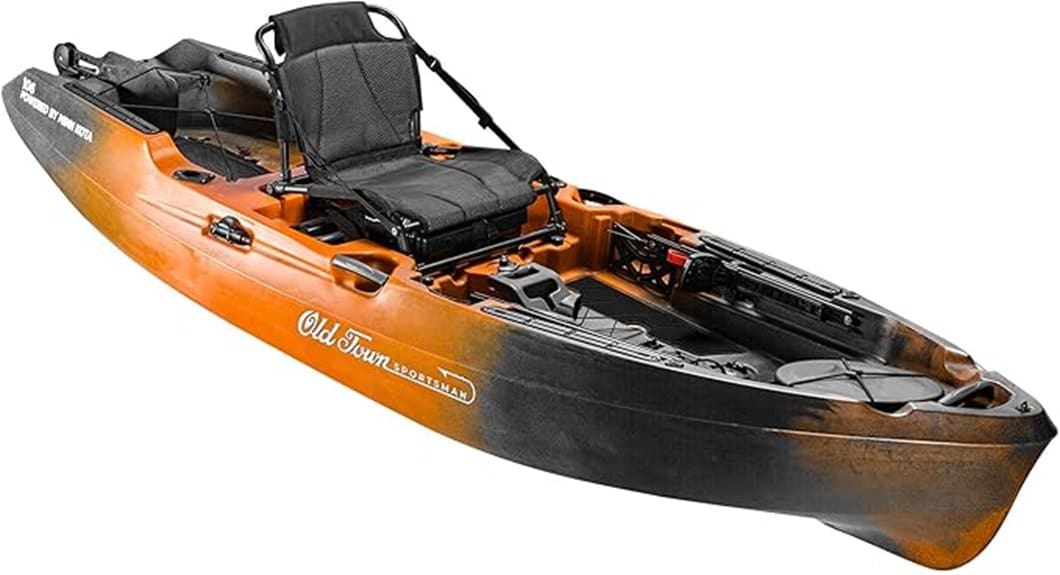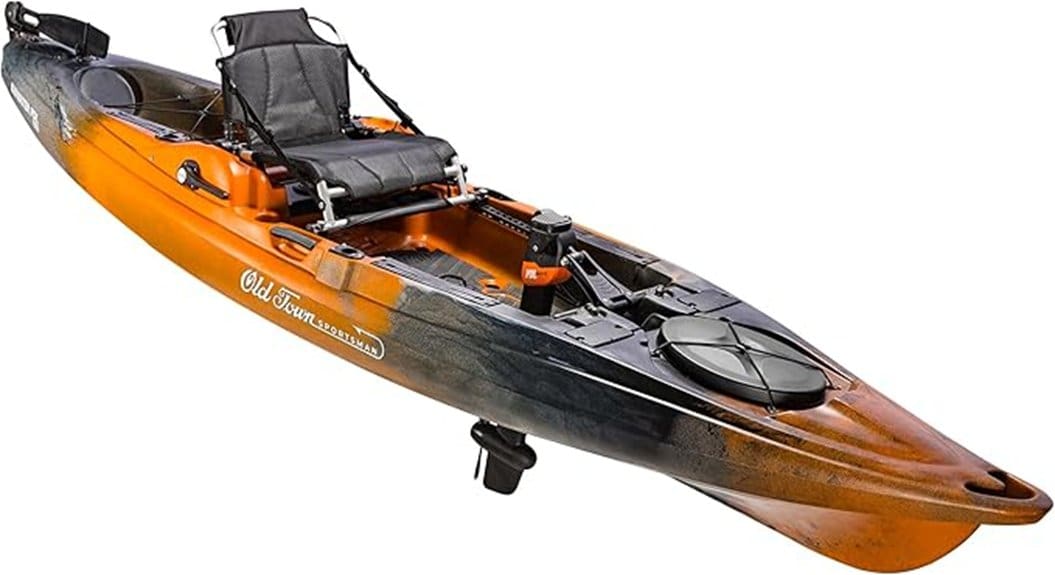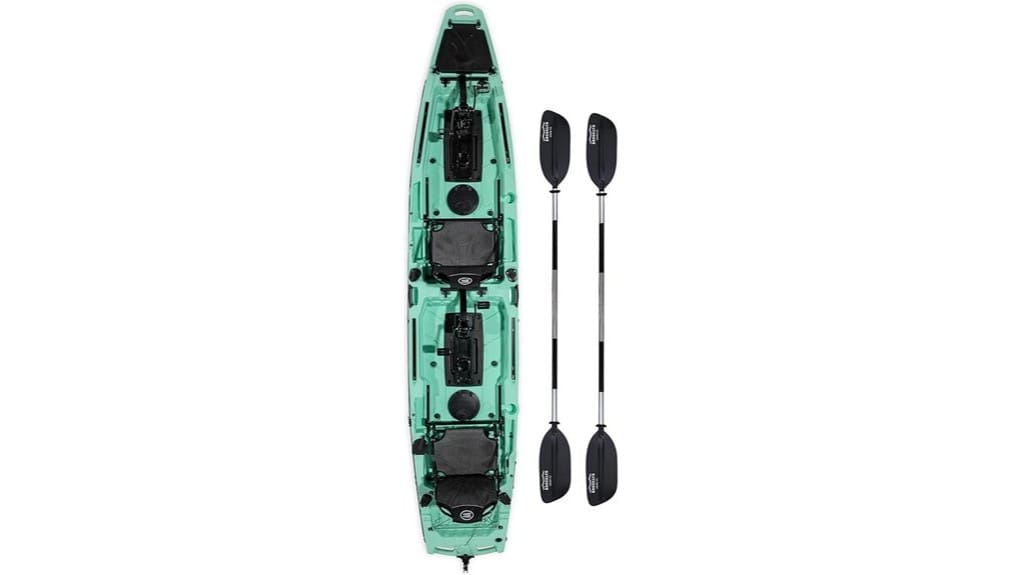
The 14.0 Pro Tandem Pedal kayak gives you a rock‑solid 14‑ft HDPE platform that pedals hands‑free, tracks like a small boat, and carries heavy gear so you can stand to cast or bring a partner, and it’s great for camping or long fish days; check pedal feel, prop clearance, hatch seals, and bring an anchor, spare prop tool, and water‑resistant bags, practice short stands to get comfy, and plan helpers or a cart for transport — keep going to see detailed tips.
Some Key Points
- Stable 14×35 HDPE hull tracks straight and carries up to 750 lb, ideal for tandem fishing or touring.
- Twin bicycle‑style pedals drive efficient propellers for hands‑free propulsion during casting or cruising.
- Hand rudder offers tight turning and precise handling for docking and rough‑water corrections.
- Ample deck space, three flush rod holders, and mod‑friendly layout support two anglers and overnight gear.
- Nearly 100 lb transport weight; plan helpers, a cart or roof rack and follow basic drive maintenance.
Is the 14.0 Pro Tandem Pedal Kayak Worth It? Quick Verdict and Who It’s Best For
If you’re weighing whether the 14.0 Pro Tandem Pedal Kayak is worth it, think about what you want to do first—fish, tour, or just cruise—and then compare that to what this boat actually gives you: a very stable 14‑foot HDPE hull that tracks straight and carries up to 750 pounds, twin bicycle-style pedals for hands-free propulsion, a hand rudder for tight turns, and room for two people plus serious gear, so if you plan to stand up to cast, haul camping kit for a weekend, or fish with a partner it’s a strong match. You’ll want basic maintenance tips, like flushing the drive, greasing fittings, and checking fasteners, plus think long term about resale value, keeping receipts and storing it covered to protect the hull, and bring a crate of essentials first—anchor, spare lines, tool kit—so your first trips feel free, capable, and low-stress. Check Brooklyn Kayak Co. for compatible accessories and parts to keep the kayak outfitted for your adventures, including racks, rod holders, and gear bags for easy organization and transport accessories.
How the Pedal-Propeller System Performs: Speed, Efficiency, and Hands‑Free Use
Put your feet in the pedals and you’ll quickly see what makes the propeller drive useful for long days on the water: those twin bicycle-style pedals turn high‑efficiency props that let you move hands‑free, so you can cast, net, or check a map without interrupting forward motion, and when you need precision the hand rudder responds cleanly to small inputs for tight turns. You’ll notice pedal ergonomics matter—adjust your seat, set cadence, and you’ll cruise efficiently with less leg strain; watch for propeller noise at low revs, keep debris clear, and carry a small tool kit and spare prop for peace of mind. Pedal kayaks are popular with outdoor enthusiasts who enjoy adventures on the water.
Stability, Tracking, and Handling: Stand‑Up Fishing and Rough‑Water Behavior
Standing on a kayak can feel intimidating, but the 14.0 Pro’s wide 14 × 35 hull gives you a predictable, planted platform that’s built for it—so start by checking your stance and gear placement, keep weight centered and low, and you’ll be surprised how steady it is even when you shift to cast or change foot position. You’ll notice stand up stability comes from that broad beam, low center of gravity, and scupper drainage, so practice short stands, brace with knees, and move slowly. For rough water tracking, use the rudder, trim gear fore/aft, ease into waves, and keep pedals steady. The kayak is also well-suited to anglers who prefer pedal propulsion and accessories common to fin drive kayaks.
Fishing and Storage Features in Real Use: Rod Holders, Hatches, and Cargo Capacity
One of the first things you'll notice when you load up the 14.0 Pro for a day of fishing is how the gear layout works together, so start by thinking about where you'll want quick access versus what can ride for the long haul. You’ll appreciate three flush rod holders for secure rod rigging, but you’ll also want easy deck modification spots for adding extra mounts or a crate, and consider livewell integration options if you plan to keep bait or catch. Pack tackle by use, stow big coolers aft, test hatch seals, and balance load before launch. The 14.0 Pro’s layout is optimized for pedal kayak systems, making rigging and storage straightforward for all-day outings.
Practical Buying Considerations: Weight, Transport, Warranty, and Value for Money
Now that you’ve thought through rod placement and where to stash a cooler or tackle, it helps to look at how the kayak’s size and weight will affect getting on and off the water, what protections the warranty gives you, and whether the whole package is worth the price. You’ll note the nearly 100 lb transport weight, so plan helpers, a cart, or a roof rack that fits 14 ft boats, practice lifting at home, and check Warranty coverage details, what’s excluded and for how long. Do a Value comparison with rivals, estimate Resale potential, and decide if freedom beats effort. This review also considers how the 14.0 Pro fits the needs of tandem anglers who prioritize stability and storage.
Some Questions Answered
Does It Fit in a Standard Garage or on a Rooftop Rack?
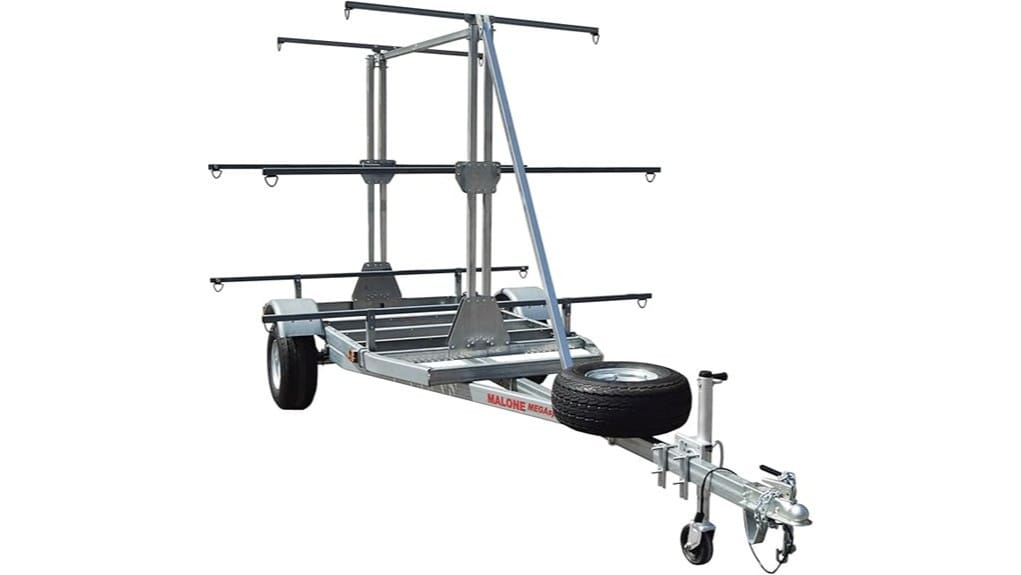
Yes, it fits garage space and is roof compatible if you plan ahead; measure your garage depth and door height against the 14 ft length, and clear overhead items before sliding it in. For roof racks, use strong crossbars, cam straps, bow/stern tie‑downs, and a hull cradle or foam blocks to protect the keel, and enlist a helper for lifting — it’s heavy, so bring gloves and a good loading plan.
Can One Retrofit an Electric Motor or Fish Finder Easily?
Yes, you can retrofit an electric motor and fish finder, but you'll plan wisely: pick a transom or bow-mount motor with a compatible motor mounting plate or clamp, reinforce the hull area if needed, carry a small deep-cycle battery in a secured, ventilated box, and mount a fish finder on a kayak-friendly bracket or transducer scupper mount; test balance and tracking with gear, bring extra straps and waterproof connectors, and practice shallow launches first.
Are Replacement Propellers and Parts Readily Available?
Yes, you can usually find replacement propellers and aftermarket hardware, you’ll want to check the pedal drive’s model and prop specs first, look for OEM matches or compatible aftermarket propellers that list pitch and diameter, order spare kits and simple tools to carry, confirm shaft and hub fitment, and keep a small parts kit with cotter pins, seals, and mounting bolts so you’re ready to repair on the water or at camp.
How Long Does the Warranty Process Take for Claims?
You’ll usually see a claim turnaround of about 1–4 weeks, depending on inspection and shipping, but it can stretch longer if parts or third‑party checks are needed. Start by gathering documentation requirements: purchase receipt, photos of damage, serial/part numbers, and your contact info, then file online or call support. Keep copies, follow up weekly, and ask for a case number so you can push things faster if it lags.
Is Assembly Required Out of the Box or Fully Assembled?
It ships mostly assembled, but you’ll unpack boxed components and follow the Quick start guide to finish setup, tighten fittings, attach the propeller drive and rudder, and install seats and pedals, so bring basic tools and a friend for lifting. Check for bolts, seals, and included paddles, test steering on land, and read the warranty notes before hitting water, that way you’ll be safe and ready to go.